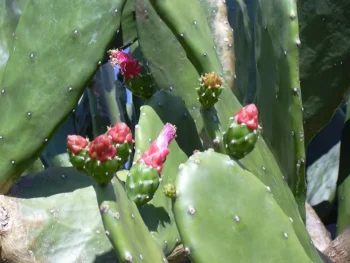
Cochineal Nopal Cactus: A Striking Addition to Warm-Climate Gardens
Meet the cochineal nopal cactus (Opuntia cochenillifera), a distinctive member of the prickly pear family that’s been making itself at home in warm regions across the United States and Pacific territories. With its architectural paddle-shaped segments and eye-catching blooms, this perennial shrub brings a touch of desert drama to gardens from Florida to Hawaii.
What’s in a Name?
You might hear this cactus called by different names depending on where you are. In Palau, it’s known as chesbocheb, while botanists sometimes refer to it by its older scientific names like Nopalea cochenillifera. The cochineal part of its common name hints at its historical connection to the cochineal insect, which was once cultivated on similar cacti for red dye production.
Where You’ll Find It Growing
Originally hailing from Mexico and Central America, the cochineal nopal cactus has established itself as a non-native resident in several U.S. locations. You can spot it thriving in Florida, Hawaii, Guam, Palau, Puerto Rico, and the U.S. Virgin Islands, where it reproduces naturally and persists without human intervention.
- Species observed
- No observations
Garden Appeal and Landscape Role
This shrubby cactus typically stays under 13-16 feet tall, making it a manageable size for most garden settings. Its flat, paddle-shaped segments create bold architectural lines that work beautifully as:
- Specimen plants in xerophytic or desert-themed gardens
- Dramatic focal points in Mediterranean-style landscapes
- Container plants for patios and courtyards
- Low-maintenance additions to rock gardens
When conditions are right, the plant rewards gardeners with colorful blooms that attract bees and other pollinators, adding both beauty and ecological value to your space.
Growing Conditions and Care
Like most cacti, the cochineal nopal cactus is refreshingly low-maintenance once you understand its needs. It’s classified as an obligate upland plant in most regions, meaning it strongly prefers well-draining, non-wetland conditions.
Ideal growing conditions include:
- Full sun exposure
- Well-draining soil (essential to prevent root rot)
- USDA hardiness zones 9-11
- Minimal watering once established
- Protection from frost and freezing temperatures
Planting and Care Tips
Getting your cochineal nopal cactus established is straightforward with these guidelines:
- Location: Choose the sunniest spot in your garden with excellent drainage
- Soil: Amend heavy clay soils with sand or gravel to improve drainage
- Watering: Water deeply but infrequently; allow soil to dry completely between waterings
- Safety: Always wear thick gloves when handling – those spines are no joke!
- Winter protection: In borderline zones, consider container growing so you can move plants indoors during cold snaps
Should You Plant It?
The cochineal nopal cactus can be a wonderful addition to warm-climate gardens, especially if you’re drawn to drought-tolerant, architectural plants. However, since it’s not native to the United States, you might also consider native alternatives that provide similar aesthetic appeal while supporting local ecosystems.
Some native options to explore include regional prickly pear species (Opuntia humifusa in the Southeast, for example) or other native succulents and drought-tolerant plants suited to your specific area.
Whether you choose the cochineal nopal cactus or a native alternative, you’ll be adding a low-maintenance, water-wise plant that brings unique character to your landscape. Just remember: with great paddles comes great responsibility – handle with care and enjoy the desert vibes!