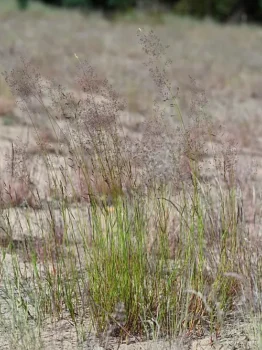
Colonial Bentgrass: A Cool-Season Grass for Specific Garden Needs
If you’re looking for a fine-textured grass that can handle cooler climates and create a dense, carpet-like lawn, colonial bentgrass (Agrostis capillaris) might catch your attention. This European native has made itself quite at home across North America, though it comes with both benefits and considerations that every gardener should understand.
What is Colonial Bentgrass?
Colonial bentgrass is a perennial cool-season grass that originally hails from Europe and western Asia. You might also see it listed under several scientific synonyms, including Agrostis tenuis or Agrostis vulgaris, but Agrostis capillaris is the current accepted name. This rhizomatous grass spreads by underground stems, creating dense mats that can reach up to 2 feet tall, though it’s typically kept much shorter when used as turf.
Where Does Colonial Bentgrass Grow?
Colonial bentgrass has established itself across a remarkably wide range in North America. You’ll find it growing in states from Alabama to Alaska, and from coast to coast, including Hawaii. It’s also common throughout much of Canada, from British Columbia to Newfoundland and Labrador. This extensive distribution shows just how adaptable this grass can be to different climates and conditions.
- Species observed
- No observations
Should You Plant Colonial Bentgrass?
Here’s where things get interesting. Colonial bentgrass isn’t native to North America, which means it doesn’t provide the same ecological benefits as our indigenous grasses. However, it’s not considered invasive or noxious either, so the choice often comes down to your specific gardening goals and values.
Reasons You Might Choose Colonial Bentgrass:
- Creates a fine-textured, dense lawn surface
- Handles cool, moist climates well
- Rapid growth rate means quick establishment
- Readily available commercially
- Tolerates moderate foot traffic
Reasons to Consider Alternatives:
- High maintenance requirements
- Poor drought tolerance
- Needs frequent fertilization
- Doesn’t support native wildlife like indigenous grasses
- Can struggle in hot summer weather
Native Alternatives to Consider
If you’re interested in supporting local ecosystems, consider native cool-season grasses like buffalo grass in the Great Plains, or native sedges and rushes that can create similar fine-textured groundcover while supporting local wildlife.
Growing Conditions and Care
Colonial bentgrass is definitely a high-maintenance choice that thrives in USDA hardiness zones 3-8. Here’s what it needs to succeed:
Soil and Site Requirements:
- Prefers coarse to medium-textured, well-draining soils
- Soil pH between 4.9-7.5 (slightly acidic to neutral)
- Full sun locations (shade intolerant)
- Areas with consistent moisture availability
Climate Preferences:
- Cool, moist conditions (32-60 inches annual precipitation)
- Minimum 120 frost-free days
- Can handle temperatures down to -53°F
- Struggles in hot, humid summers
Planting and Maintenance Tips
Colonial bentgrass is typically established from seed, with about 6 million seeds per pound – that’s incredibly tiny! Here are the key points for success:
Planting:
- Sow seeds in early spring or fall
- Prepare a fine seedbed with good soil contact
- Keep soil consistently moist during germination
- Seeds have high vigor and establish quickly
Ongoing Care:
- High fertility requirements – plan for regular fertilization
- Consistent watering (high moisture use)
- Regular mowing to maintain desired height
- Monitor for stress during hot weather
Environmental Considerations
Colonial bentgrass has an interesting relationship with water. Depending on your region, it can grow in both wetland and upland conditions, though it generally prefers consistently moist (but not waterlogged) soils. In most areas, it’s classified as facultative, meaning it can handle both wet and dry sites, though it definitely prefers the moister end of the spectrum.
As a wind-pollinated grass, colonial bentgrass doesn’t offer much direct benefit to pollinators like bees and butterflies. Its primary wildlife value comes from seed production for birds, though this benefit is modest compared to native grass species.
The Bottom Line
Colonial bentgrass can create a beautiful, fine-textured lawn in the right conditions, but it’s definitely not a low-maintenance choice. If you live in a cool, moist climate and don’t mind regular fertilization and watering, it might work for your specific needs. However, if you’re looking to create habitat for wildlife or prefer lower-maintenance landscaping, exploring native grass alternatives could be a more rewarding path.
Whatever you choose, remember that the best garden is one that fits both your lifestyle and your local ecosystem. Sometimes that means embracing non-native plants for specific purposes, and sometimes it means discovering the beauty in what naturally belongs in your area.