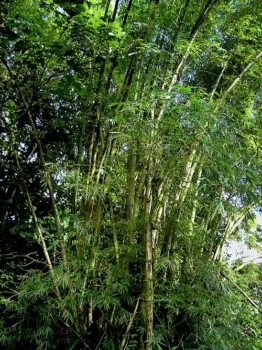
Common Bamboo: A Towering Giant for Warm Climate Gardens
If you’ve ever dreamed of creating a tropical paradise in your backyard or need a fast-growing privacy screen that means business, common bamboo (Bambusa vulgaris) might have caught your attention. This impressive perennial grass can transform landscapes quickly, but like many fast-growing plants, it comes with both benefits and considerations worth exploring.
What Exactly is Common Bamboo?
Common bamboo, scientifically known as Bambusa vulgaris, is a large clumping bamboo that’s quite the overachiever in the growth department. Despite what some confusing descriptions might suggest, this isn’t a tiny shrub – it’s a rapid-growing giant that can reach an impressive 50 feet tall at maturity. With its graceful, erect growth form and fine-textured green foliage, it creates a dramatic vertical element that’s hard to ignore.
Where Does It Come From?
Originally native to Southeast Asia, including Southern China, Myanmar, Malaysia, and India, common bamboo has become a well-traveled species. It’s now established as a non-native plant that reproduces spontaneously in several U.S. regions, including Hawaii, the lower 48 states, Puerto Rico, and the U.S. Virgin Islands.
Current Geographic Distribution
You’ll find common bamboo growing in Florida, Hawaii, South Carolina, Guam, Palau, Puerto Rico, and the Virgin Islands. Its presence in these warm, humid locations gives you a good hint about its preferred climate conditions.
- Species observed
- No observations
The Appeal Factor
There’s no denying that common bamboo has serious aesthetic appeal. Its tall, green culms create an almost instant tropical feel, while the dense foliage provides excellent screening. The plant grows in a clumping bunch formation rather than spreading aggressively, which makes it more manageable than some bamboo species. Plus, with its rapid growth rate, you won’t be waiting decades to see results.
Garden Role and Landscape Potential
Common bamboo excels in several landscape roles:
- Privacy screens and living fences
- Windbreaks in coastal areas
- Specimen plants for dramatic focal points
- Background plantings in tropical-themed gardens
- Noise barriers along busy streets
It’s particularly well-suited for tropical and subtropical gardens, Asian-inspired landscapes, and modern designs where bold, architectural plants are desired.
Growing Conditions and Climate Needs
Common bamboo is quite specific about its climate preferences. It thrives in USDA hardiness zones 9b through 11, tolerating minimum temperatures down to about 17°F. The plant needs year-round warmth, requiring at least 365 frost-free days annually.
When it comes to growing conditions, this bamboo is reasonably adaptable:
- Soil: Accepts coarse, medium, and fine-textured soils with pH ranging from 4.0 to 7.0
- Water: Medium moisture requirements (60-100 inches precipitation annually)
- Sun: Intolerant of shade – needs full sun for best growth
- Drainage: Prefers well-draining soil but has medium tolerance for anaerobic conditions
Wetland Considerations
The plant’s relationship with water varies by region. In most areas, it’s classified as Facultative Upland, meaning it usually grows in non-wetland areas but can occasionally appear in wetlands. However, in the Atlantic and Gulf Coastal Plain, it’s considered Obligate Upland, almost never occurring in wetlands.
Planting and Care Tips
Successfully growing common bamboo requires attention to a few key details:
- Planting density: Allow 170-300 plants per acre for optimal growth
- Root space: Ensure at least 24 inches of root depth
- Propagation: Can be grown from seed, bare root plants, containers, or sprigs
- Fertilization: Low fertility requirements make it relatively low-maintenance
- Pruning: High hedge tolerance means it responds well to regular trimming
- Barriers: Consider root barriers to control spread, even though it’s clumping
The plant is fire-resistant but has low fire tolerance, meaning while it won’t easily catch fire, it doesn’t recover well from fire damage.
Wildlife and Pollinator Benefits
When it comes to supporting local wildlife, common bamboo has limited benefits. Like most bamboos, it rarely flowers – sometimes going 65-120 years between flowering events – so it provides minimal value to pollinators. Its wildlife benefits are largely unknown, though the dense growth can provide shelter for birds.
Should You Plant It?
The decision to plant common bamboo depends on your specific needs and location. While it’s not native to North America and doesn’t provide significant ecological benefits, it’s also not listed as invasive or noxious in most areas. If you need fast privacy screening in a warm climate and don’t mind working with a large, dramatic plant, it could be a viable option.
However, consider exploring native alternatives first. Depending on your region, native grasses, shrubs, or trees might provide similar screening benefits while supporting local ecosystems. Consult with local native plant societies or extension offices for recommendations specific to your area.
The Bottom Line
Common bamboo is a impressive plant that delivers on its promise of rapid growth and tropical appeal. Just remember that with great growth comes great responsibility – this 50-foot giant needs space, proper climate conditions, and thoughtful placement. If you’re up for the challenge and live in the right climate zone, it can be a striking addition to the landscape. Just don’t forget to explore native options that might serve your needs while providing more benefits to local wildlife.