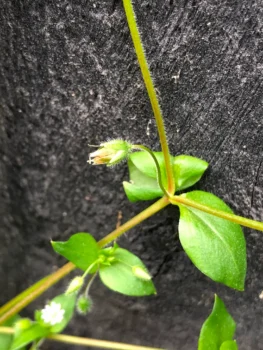
Common Chickweed: The Unassuming Garden Guest That Divides Gardeners
If you’ve ever wondered about those small, star-flowered plants that seem to pop up everywhere in your garden, you’ve likely encountered common chickweed (Stellaria media). This diminutive plant has quite the reputation – some gardeners curse it as a persistent weed, while others embrace it as a useful ground cover and edible green. Let’s dive into what makes this little plant so controversial and whether it deserves a spot in your garden.
What Exactly Is Common Chickweed?
Common chickweed is a low-growing forb – basically a non-woody plant that hugs the ground and spreads outward. Despite its humble appearance, this plant is quite the survivor, functioning as both an annual and short-lived perennial depending on growing conditions. You might also see it listed under its scientific name Stellaria media, along with several botanical synonyms like Alsine media.
Originally hailing from Europe and Asia, common chickweed has made itself at home across North America as a non-native species. It now grows wild from coast to coast, thriving in everything from Alaska’s harsh climate to Hawaii’s tropical conditions, and everywhere in between – including all Canadian provinces and U.S. states.
- Species observed
- No observations
The Great Chickweed Debate: Friend or Foe?
Here’s where things get interesting. Common chickweed sits in that gray zone that makes many gardeners scratch their heads. It’s not native to North America, but it’s also not officially classified as invasive in most areas. So should you plant it or pull it?
Reasons You Might Want Chickweed Around:
- It’s completely edible – leaves, stems, flowers, and all
- Provides quick ground cover in difficult spots
- Attracts small beneficial insects with its tiny white flowers
- Extremely hardy and low-maintenance
- Can help suppress other weeds
- Thrives in cool weather when other plants struggle
Reasons You Might Want to Avoid It:
- Can spread aggressively and outcompete desired plants
- Self-seeds prolifically, making it hard to control
- May look weedy in formal garden settings
- Not native, so it doesn’t support local ecosystems as well as native alternatives
Growing Common Chickweed Successfully
If you decide to give common chickweed a try, you’ll find it’s refreshingly easy to grow – perhaps too easy! This plant is incredibly adaptable and thrives in USDA hardiness zones 2-9, which covers most of North America.
Ideal Growing Conditions:
- Light: Partial shade to full sun (prefers some afternoon shade in hot climates)
- Soil: Adapts to various soil types but prefers moist, fertile ground
- Water: Consistent moisture is ideal, though it tolerates some drought
- Temperature: Loves cool weather and can handle frost
Planting and Care Tips:
- Seeds germinate easily in cool, moist conditions
- Spring and fall are the best planting times
- Barely cover seeds with soil – they need light to germinate
- Once established, it requires minimal care
- Regular harvesting (if using as food) helps control spread
- Can be mowed or cut back if it gets too aggressive
Native Alternatives to Consider
If you love the idea of a low-growing, edible ground cover but prefer native options, consider these alternatives that will better support local wildlife:
- Wild ginger (Asarum canadense) for shaded areas
- Wintergreen (Gaultheria procumbens) for acidic soils
- Wild strawberry (Fragaria virginiana) for sunny spots
- Creeping phlox (Phlox subulata) for rock gardens
The Bottom Line
Common chickweed is like that neighbor who’s perfectly pleasant but wasn’t exactly invited to the block party. It’s not going to harm your local ecosystem, but it’s not going to enhance it either. If you’re looking for a low-maintenance ground cover and don’t mind its enthusiastic spreading habit, chickweed can be a practical choice. However, if you’re passionate about supporting native wildlife and pollinators, you’ll get more ecological bang for your buck with native alternatives.
Whatever you decide, remember that chickweed is likely to show up in your garden whether you invite it or not. Sometimes the best approach is simply to embrace what’s already there, harvest it for dinner, and enjoy this resilient little plant for what it is – a survivor that connects us to gardens around the world.