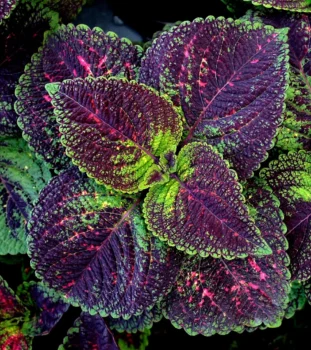
Common Coleus: A Colorful Non-Native Addition to Your Shade Garden
If you’ve ever wandered through a garden center and been mesmerized by those incredibly vibrant, multicolored leafy plants, chances are you were admiring common coleus (Solenostemon scutellarioides). This eye-catching plant has become a garden favorite for its spectacular foliage that comes in more color combinations than a painter’s palette.
What Exactly Is Common Coleus?
Common coleus is a perennial forb—basically a soft-stemmed, non-woody plant that lacks the thick, bark-covered stems of shrubs and trees. Originally from Southeast Asia, particularly Malaysia, this plant has made itself quite at home in warmer parts of the United States. You might also see it sold under its old scientific names like Coleus blumei or Coleus scutellarioides, as botanists have shuffled it around the classification system a few times over the years.
Where Does It Grow?
While common coleus isn’t native to the United States, it has naturalized in several warm regions including Florida, Hawaii, Puerto Rico, the U.S. Virgin Islands, and various Pacific territories like Guam and Palau. The plant has established itself as a non-native species that reproduces on its own in these areas, thriving in the warm, humid conditions that remind it of home.
- Species observed
- No observations
Why Gardeners Love (and Sometimes Question) Common Coleus
Let’s be honest—common coleus is a showstopper when it comes to foliage color. Its leaves can display brilliant combinations of red, purple, green, yellow, pink, and cream that would make any garden pop with personality. It’s particularly beloved for adding vibrant color to shady spots where many flowering plants struggle to perform.
However, since it’s not native to North American ecosystems, some gardeners prefer to choose native alternatives that better support local wildlife and natural habitats. If you’re looking for native plants with colorful foliage, consider options like native heucheras (coral bells) or native coleus relatives in the mint family.
Perfect Growing Conditions
Common coleus is surprisingly easy to please, which explains why it’s become so popular among both novice and experienced gardeners:
- Light: Partial shade to full shade (direct sunlight can scorch those beautiful leaves)
- Soil: Moist, well-draining soil that doesn’t get waterlogged
- Temperature: Thrives in warm conditions; hardy in USDA zones 10-11
- Water needs: Regular watering, but not soggy conditions
The plant’s wetland status is classified as Facultative Upland, which means it usually prefers non-wetland conditions but can tolerate occasional moisture—making it fairly adaptable to different garden situations.
How to Grow Common Coleus Successfully
Growing common coleus is refreshingly straightforward:
- Planting: In cooler climates (zones 9 and below), treat it as an annual and plant after the last frost
- Spacing: Give plants adequate room to spread—they can get bushier than you might expect
- Maintenance: Pinch off flower spikes as they appear to keep the plant’s energy focused on producing those stunning leaves
- Watering: Keep soil consistently moist but not waterlogged
- Feeding: A balanced, slow-release fertilizer in spring will keep the colors vibrant
Garden Design Ideas
Common coleus shines in several garden settings:
- Shade gardens: Use as a colorful accent among green hostas and ferns
- Container gardens: Perfect for pots on patios and decks
- Border plantings: Creates striking edges along walkways
- Tropical-themed landscapes: Fits right in with other warm-climate plants
Wildlife and Pollinator Considerations
While common coleus does produce small flower spikes that can attract some pollinators, it’s primarily grown for its foliage rather than its ecological benefits. If supporting native wildlife is a priority for your garden, consider incorporating native alternatives alongside or instead of coleus to provide better habitat and food sources for local insects and birds.
The Bottom Line
Common coleus offers undeniable visual appeal and is remarkably easy to grow, making it a popular choice for gardeners wanting instant color in shady spots. While it’s not native to North America, it’s also not considered invasive or harmful to local ecosystems. Whether you choose to include it in your garden is ultimately a personal decision based on your gardening goals and aesthetic preferences. If you do decide to grow it, you’ll have a reliable, colorful companion that asks for very little while giving back plenty of visual wow factor.