Common Comfrey: A Hardy Herb with Old-World Charm
If you’re looking for a low-maintenance perennial that brings a touch of cottage garden romance to your landscape, common comfrey (Symphytum officinale) might catch your eye. This robust herb has been cherished by gardeners for centuries, though it comes with both benefits and considerations worth exploring.
What is Common Comfrey?
Common comfrey is a perennial forb—essentially a non-woody flowering plant—that originated in Europe and western Asia. While it’s not native to North America, this hardy plant has established itself across much of the continent, from Alberta to Arkansas and everywhere in between. You’ll find it thriving in nearly every U.S. state and Canadian province, testament to its remarkable adaptability.
- Species observed
- No observations
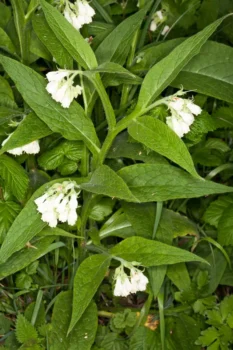
This isn’t a plant that’s going to fade into the background. Common comfrey grows as a substantial clump of large, lance-shaped leaves covered in coarse hairs that give them a distinctly fuzzy texture. The real show-stopper, though, comes in late spring and early summer when clusters of drooping, bell-shaped flowers appear in shades of purple, pink, white, or cream.
Why Consider Growing Common Comfrey?
There are several compelling reasons gardeners gravitate toward this Old World herb:
- Pollinator magnet: Those drooping flower clusters are absolutely beloved by bees, butterflies, and other beneficial insects seeking nectar
- Incredibly hardy: Thriving in USDA zones 4-9, comfrey laughs off cold winters and bounces back year after year
- Low maintenance: Once established, this plant practically takes care of itself
- Cottage garden appeal: Perfect for creating that romantic, slightly wild aesthetic
- Companion planting benefits: Known as a dynamic accumulator, comfrey’s deep roots pull nutrients from the subsoil
Where Does Comfrey Fit in Your Garden?
Common comfrey works beautifully in several garden styles. Herb gardeners appreciate its traditional medicinal reputation, while cottage garden enthusiasts love its informal, slightly unruly character. It’s also a favorite in permaculture designs, where its nutrient-accumulating properties make it valuable for composting and soil improvement.
Consider tucking comfrey into partially shaded areas where other plants might struggle, or let it naturalize in informal areas of your landscape where its spreading tendency won’t be problematic.
Growing Conditions and Care
One of comfrey’s greatest strengths is its easygoing nature. Here’s what this adaptable plant prefers:
- Light: Partial shade to full sun (though it appreciates some afternoon shade in hot climates)
- Soil: Moist, rich soil is ideal, but comfrey tolerates various soil types
- Water: Consistent moisture when young, but drought-tolerant once established
- Space: Give it room—this plant can spread both by seed and root division
Important Considerations
Before you fall head-over-heels for common comfrey, there are a few things to keep in mind. As a non-native species, it doesn’t provide the same ecological benefits as plants that co-evolved with local wildlife. While it does attract pollinators, native alternatives might offer more comprehensive support for your local ecosystem.
Additionally, comfrey can be quite enthusiastic about spreading. It self-seeds readily and can also spread through its root system, so you’ll want to plant it somewhere you don’t mind it taking over or be prepared to manage its expansion.
Native Alternatives to Consider
If you love the idea of comfrey but want to support native ecosystems, consider these alternatives that offer similar benefits:
- Wild bergamot (Monarda fistulosa) for pollinator appeal
- Wild ginger (Asarum canadense) for shaded areas with large leaves
- Purple coneflower (Echinacea purpurea) for medicinal interest and wildlife benefits
The Bottom Line
Common comfrey is an undeniably charming plant that brings old-world character and reliable blooms to the garden. While it may not be native, it’s not considered problematic in most areas where it grows. If you choose to grow it, you’ll enjoy its low-maintenance nature and pollinator appeal—just be mindful of its spreading tendencies and consider pairing it with native plants to create a more ecologically diverse landscape.
Whether you’re drawn to its cottage garden charm, its reputation as a companion plant, or simply its ability to thrive with minimal fuss, common comfrey can certainly earn its place in the right garden setting.