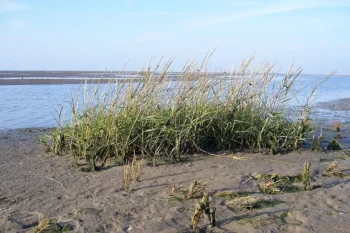
Common Cordgrass: A Hardy Coastal Grass for Challenging Conditions
If you’re dealing with salty, soggy soil that makes most plants throw in the towel, common cordgrass (Spartina anglica) might just be your gardening hero. This tough-as-nails perennial grass thrives where others fear to tread, making it both a blessing and a consideration for coastal gardeners.
What is Common Cordgrass?
Common cordgrass is a robust perennial grass that originally hails from Europe. Also known by its synonym Sporobolus anglicus, this hardy plant has made itself at home along the coasts of British Columbia, California, and Washington. It’s what botanists call a graminoid – essentially a grass or grass-like plant that knows how to handle life’s saltier moments.
Where Does It Grow?
You’ll find common cordgrass establishing colonies along the Pacific Coast, from the Canadian border down to California. This non-native species has successfully naturalized in coastal areas where it reproduces and persists without human intervention.
- Species observed
- No observations
Should You Plant Common Cordgrass?
Here’s where things get interesting. Common cordgrass is like that friend who’s incredibly helpful in a crisis but might overstay their welcome. While it’s excellent for specific challenging conditions, it’s worth considering both the pros and cons before inviting it into your landscape.
The Good News
- Exceptional salt tolerance – perfect for oceanfront properties
- Outstanding erosion control along shorelines
- Thrives in waterlogged conditions where other plants fail
- Low maintenance once established
- Attractive golden-brown fall color
The Considerations
- Non-native species that may outcompete local plants
- Spreads aggressively through underground rhizomes
- Limited value for local pollinators (wind-pollinated)
- Can form dense colonies that exclude other vegetation
Native Alternatives to Consider
Before reaching for common cordgrass, consider these native options that provide similar benefits while supporting local ecosystems:
- Alkali saltgrass (Distichlis spicata) – excellent salt tolerance
- Pacific saltgrass (Distichlis spicata var. stricta) – native coastal grass
- Saltwater plantain (Plantago maritima) – salt-tolerant native
Growing Common Cordgrass Successfully
If you’ve decided that common cordgrass is the right fit for your specific situation – perhaps for erosion control or salt marsh restoration – here’s how to grow it successfully.
Ideal Growing Conditions
- Location: Salt marshes, mudflats, coastal areas
- Soil: Tolerates saline, waterlogged soils
- Water: Requires consistent moisture; tolerates saltwater flooding
- Sun: Full sun to partial shade
- Climate: Hardy in USDA zones 4-9
Planting and Care Tips
- Plant in spring when soil temperatures warm
- Space plants 2-3 feet apart (they’ll fill in quickly)
- Keep soil consistently moist during establishment
- No fertilization needed – this grass is naturally tough
- Monitor spread and manage boundaries as needed
- Cut back in late winter if desired, though not necessary
Appearance and Growth
Common cordgrass forms impressive colonies of narrow-leaved grass that can reach 2-4 feet tall and spread indefinitely through underground rhizomes. In summer, it produces inconspicuous flower spikes, and come fall, the entire plant transforms into attractive golden-brown plumes that persist through winter.
The Bottom Line
Common cordgrass is undeniably effective for specific coastal challenges like erosion control and salt tolerance. However, as a non-native species, it’s worth carefully considering whether native alternatives might serve your needs while better supporting local wildlife and ecosystems. If you do choose to plant it, be prepared to manage its enthusiastic spreading habit and consider it a long-term landscape commitment.
Remember, the best plant choices are those that work harmoniously with your local environment while meeting your specific gardening goals.