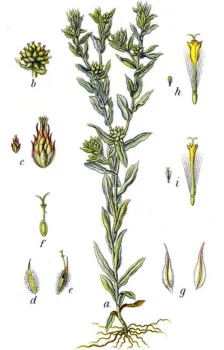
Common Cottonrose: A Quiet Pioneer for Challenging Garden Spots
Meet common cottonrose (Filago vulgaris), a humble little annual that’s been quietly making itself at home across North America for quite some time. This unassuming member of the daisy family might not win any beauty contests, but it has some interesting qualities that make it worth knowing about—especially if you’re dealing with those tricky dry, poor-soil areas where other plants turn up their noses.
What Exactly Is Common Cottonrose?
Common cottonrose is a small annual forb, which is just a fancy way of saying it’s a soft-stemmed herbaceous plant that completes its entire life cycle in one growing season. Originally from Europe and western Asia, this little pioneer has established itself across much of North America, from British Columbia down to Georgia and from coast to coast.
You might occasionally see it listed under some of its historical names like Filago germanica or Gnaphalium germanicum, but Filago vulgaris is the name that stuck. The cottonrose part of its common name comes from its woolly, grayish-white appearance—though it bears no relation to actual cotton or roses.
Where You’ll Find It Growing Wild
Common cottonrose has made itself comfortable in nineteen states and two Canadian provinces: Alabama, British Columbia, Ontario, Delaware, District of Columbia, Georgia, Kentucky, Maryland, Massachusetts, New Jersey, New York, North Carolina, Ohio, Oregon, Pennsylvania, South Carolina, Virginia, Washington, and West Virginia. It’s particularly fond of disturbed sites, roadsides, and areas with sandy or gravelly soil.
- Species observed
- No observations
Should You Grow Common Cottonrose?
Here’s where things get interesting. Common cottonrose isn’t what you’d call a showstopper—it’s more like that reliable friend who shows up when you need them. Since it’s not native to North America, you might want to consider native alternatives first, but it’s not considered invasive or problematic either.
Reasons You Might Want It:
- Extremely drought tolerant once established
- Thrives in poor, sandy, or gravelly soils where other plants struggle
- Requires virtually no maintenance
- Self-sows readily for natural-looking patches
- Provides some habitat for small insects
- Good for stabilizing disturbed or eroded areas
Reasons You Might Pass:
- Very small, inconspicuous flowers offer little visual impact
- Not a significant pollinator magnet
- Can self-seed aggressively in ideal conditions
- Native alternatives would provide better wildlife benefits
Native Alternatives to Consider
If you’re drawn to common cottonrose’s drought tolerance and ability to thrive in challenging conditions, consider these native options instead:
- Native pussytoes (Antennaria species) for similar woolly foliage
- Wild bergamot (Monarda fistulosa) for dry sites with more pollinator appeal
- Little bluestem (Schizachyrium scoparium) for drought-tolerant ground cover
- Regional native wildflower mixes suited to your specific area
How to Grow Common Cottonrose
If you decide common cottonrose fits your gardening goals, the good news is that it’s refreshingly low-maintenance.
Growing Conditions:
- Soil: Prefers sandy, gravelly, or otherwise well-drained poor soils
- Sun: Full sun to light shade
- Water: Drought tolerant; actually prefers drier conditions
- pH: Adaptable to various soil pH levels
Planting and Care Tips:
Since common cottonrose is an annual, you’ll be starting fresh each year—or letting it self-seed if you’re going for a more naturalized approach.
- Sow seeds directly in fall or early spring
- Barely cover seeds as they need light to germinate
- Water lightly until established, then leave it alone
- No fertilization needed—it actually prefers poor soil
- Allow some plants to go to seed if you want it to return next year
- Remove excess seedlings in spring if it spreads more than desired
The Bottom Line
Common cottonrose is one of those it depends plants. If you have a challenging dry site where you need something—anything—to grow, and you don’t mind a plant that’s more about function than form, it could be useful. However, given its non-native status, most gardeners would be better served by choosing native alternatives that provide similar benefits while supporting local ecosystems more effectively.
Think of common cottonrose as a plant for very specific situations: erosion control on difficult sites, naturalized areas where you want something low-key, or places where you’ve tried everything else and need a reliable survivor. Just remember that with great adaptability comes the responsibility to make sure it doesn’t overstay its welcome in your garden or spread beyond where you want it.