Common Iceplant: A Sparkling Succulent for Dry Gardens
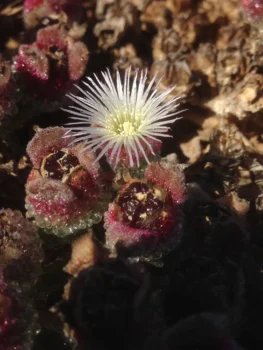
If you’ve ever spotted a plant that looks like it’s been dusted with tiny diamonds, you’ve probably encountered common iceplant (Mesembryanthemum crystallinum). This eye-catching succulent gets its name from the crystalline, water-filled cells that cover its leaves, creating a magical sparkling effect that catches the light beautifully.
What Makes Common Iceplant Special?
Common iceplant is a low-growing forb – essentially a soft-stemmed plant without woody tissue – that can function as either an annual or perennial depending on growing conditions. Its thick, fleshy leaves are covered in tiny, glistening papillae that store water and give the plant its distinctive crystalline appearance. Small white or pink flowers appear throughout the growing season, adding delicate color to complement the shimmering foliage.
Native Status and Distribution
While common iceplant may look at home in American gardens, it’s actually a non-native species originally from South Africa, the Mediterranean region, and Atlantic islands. This introduced plant has naturalized and now grows wild in Arizona, California, and Pennsylvania, reproducing spontaneously without human intervention.
- Species observed
- No observations
Where Does Common Iceplant Thrive?
This adaptable plant shows different preferences depending on the region. In western areas, it typically grows in non-wetland environments but can occasionally tolerate wetter conditions. In eastern regions, it’s more flexible, growing equally well in both wetlands and dry areas.
Garden Design and Landscape Role
Common iceplant shines in specific garden settings:
- Drought-tolerant gardens: Perfect for xeriscaping and water-wise landscapes
- Coastal plantings: Excellent salt tolerance makes it ideal for seaside gardens
- Rock gardens: Low-growing habit works well among stones and boulders
- Mediterranean-style gardens: Complements other drought-adapted plants
- Ground cover: Spreads to form attractive, water-efficient carpets
Growing Conditions and Care
Common iceplant is surprisingly easy to grow once you understand its preferences:
- Sunlight: Thrives in full sun locations
- Soil: Requires well-draining sandy or rocky soils
- Water: Drought tolerant once established; avoid overwatering
- Climate: Hardy in USDA zones 9-11
- Salt tolerance: Excellent choice for coastal conditions
Planting and Care Tips
For best success with common iceplant:
- Plant in spring after frost danger passes
- Ensure excellent drainage – this plant hates wet feet
- Water sparingly, especially once established
- No fertilization needed in most soils
- Be aware that it can self-seed readily in suitable conditions
Pollinator and Wildlife Benefits
While not a native species, common iceplant does provide some benefits to local ecosystems. Its small flowers attract bees and other small insects, offering nectar when few other plants are blooming in harsh, dry conditions.
Should You Plant Common Iceplant?
Common iceplant can be a valuable addition to the right garden, especially in challenging coastal or desert-like conditions where few other plants thrive. However, since it’s not native to North America, consider pairing it with or substituting native alternatives that provide similar benefits:
- Native sedums for succulent groundcover
- Native coastal plants for seaside gardens
- Regional drought-tolerant native species for xeriscaping
If you do choose to grow common iceplant, be mindful of its ability to self-seed and naturalize. While it’s not currently listed as invasive, responsible gardening means monitoring its spread and removing unwanted seedlings to prevent it from escaping into natural areas.
Whether you’re drawn to its sparkling appearance or need a tough plant for challenging growing conditions, common iceplant offers a unique solution for specific landscape needs – just remember to garden responsibly and consider native alternatives when possible.