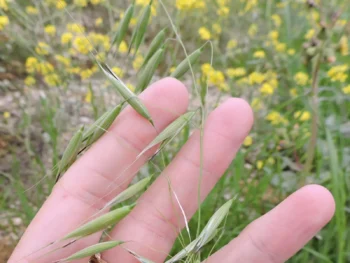
Common Oat: An Annual Grass with Agricultural Charm
If you’ve ever wondered about growing your own breakfast cereal or adding some rustic agricultural charm to your garden, common oat (Avena sativa) might just catch your interest. This tall annual grass brings a touch of farmland nostalgia to any landscape, though it comes with some important considerations for the conscientious gardener.
What Exactly is Common Oat?
Common oat is an annual grass that typically reaches about 2 feet in height with an upright, clumping growth form. During its active growing period in spring and summer, it develops fine-textured green foliage and eventually produces drooping clusters of seeds that turn a lovely golden-brown color. The plant has a rapid growth rate, making it a quick-fill option for temporary garden spaces.
You might also encounter this plant under its botanical synonyms, including Avena byzantina or various historical classifications, but Avena sativa remains the accepted scientific name.
Where Does It Come From and Where Can You Find It?
Here’s where things get interesting from a native gardening perspective: common oat is not native to North America. Originally from the Mediterranean region and western Asia, this species has been introduced across virtually the entire continent. You can find it established in all U.S. states, Canadian provinces, and even Alaska, Hawaii, and Puerto Rico – basically everywhere from coast to coast.
- Species observed
- No observations
While it’s widely distributed, its status varies by region. In some areas like Alaska and the lower 48 states, it reproduces spontaneously and persists in the wild. In places like Canada and Greenland, it’s considered more of a temporary visitor that doesn’t establish permanent populations.
Should You Plant Common Oat in Your Garden?
This is where the native gardening perspective becomes important. As a non-native species, common oat doesn’t provide the same ecological benefits as indigenous plants. However, since it’s not classified as invasive or noxious, there’s no urgent ecological reason to avoid it entirely.
Consider common oat if you’re interested in:
- Creating a cottage garden or farmhouse aesthetic
- Growing a quick cover crop for soil improvement
- Adding texture to naturalized areas
- Experimenting with grain production on a small scale
However, if you’re committed to native gardening, consider these indigenous alternatives that provide similar ornamental value while supporting local ecosystems:
- Wild rice (Zizania species) for wetland areas
- Little bluestem (Schizachyrium scoparium) for prairie gardens
- Buffalo grass (Poaceae natives) for grassland restoration
Growing Conditions and Care
Common oat is refreshingly easy to grow, adapting to various soil types from coarse to fine textures. Here’s what this accommodating annual prefers:
Soil Requirements:
- pH range: 5.3 to 8.5 (quite tolerant!)
- Medium fertility needs
- Good drainage (it’s classified as Obligate Upland in most regions)
- Root depth: minimum 8 inches
Climate Preferences:
- Cool-season annual thriving in USDA zones 2-7
- Minimum 90 frost-free days
- Tolerates temperatures down to -23°F
- Annual precipitation needs: 25-100 inches
- Low drought tolerance
Light and Water:
- Full sun (shade intolerant)
- Medium moisture requirements
- Poor tolerance for waterlogged conditions
Planting and Care Tips
Growing common oat is straightforward since it’s propagated entirely by seed. Here’s your roadmap to success:
Planting:
- Direct seed in early spring when soil can be worked
- Seeds are readily available commercially
- Expect about 19,400 seeds per pound
- Plant shallow and keep soil moist until germination
Ongoing Care:
- Provide consistent moisture during the growing season
- No special fertilization needed with medium fertility soil
- Blooms in late spring with inconspicuous yellow flowers
- Seeds mature in summer
Important Note: If you don’t want common oat self-seeding in your garden, harvest or cut the plants before the seeds fully mature and disperse. The seeds don’t persist long-term, but preventing their spread is good garden management.
Wildlife and Pollinator Value
As a wind-pollinated grass, common oat doesn’t offer nectar or pollen resources for bees and butterflies. Its wildlife value is primarily as a seed source for birds, though this benefit is limited compared to native grass species that have co-evolved with local wildlife.
The Bottom Line
Common oat can be a charming addition to informal gardens, especially if you’re going for that rural, agricultural aesthetic. It’s easy to grow, quick to establish, and won’t cause ecological harm. However, as native plant gardeners, we can often achieve similar visual effects with indigenous species that provide greater benefits to local ecosystems. Whether you choose to grow common oat or explore native alternatives, the key is making informed decisions that align with your gardening goals and environmental values.