Common Plantain: The Ubiquitous Yard Weed You Might Want to Reconsider
If you’ve ever walked across a lawn or disturbed patch of ground, chances are you’ve stepped on common plantain (Plantago major) without even knowing it. This unassuming little plant, also known as broad-leaved plantain, has made itself at home in yards and wild spaces across North America, despite being a non-native species originally from Europe and Asia.
What Is Common Plantain?
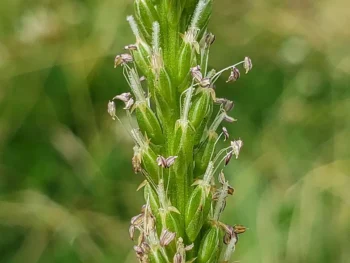
Common plantain is a perennial forb that forms distinctive rosettes of broad, ribbed leaves pressed close to the ground. At just 0.3 feet tall, it’s not winning any height contests, but what it lacks in stature, it makes up for in persistence. The plant produces inconspicuous green flowers on narrow spikes and has a moderate growth rate with a prostrate, ground-hugging shape.
Where You’ll Find It
This adaptable plant has spread throughout virtually all of North America, thriving in every U.S. state, Canadian province, and even territories like Hawaii, Puerto Rico, and the U.S. Virgin Islands. It’s particularly fond of compacted soils, sidewalk cracks, and disturbed areas where other plants struggle to establish.
- Species observed
- No observations
Should You Plant Common Plantain?
Here’s where things get interesting. While common plantain isn’t considered invasive or noxious, it’s also not something most gardeners actively seek out. It’s hardy in USDA zones 3-10 and incredibly adaptable, but its aesthetic appeal is, let’s be honest, pretty minimal. The dense green foliage and inconspicuous flowers won’t win any beauty contests.
However, if you’re interested in edible or medicinal plants, common plantain has traditionally been used for both purposes. Just remember that as a non-native species, it doesn’t provide the same ecological benefits as native alternatives.
Native Alternatives to Consider
If you’re drawn to low-growing, hardy plants, consider these native alternatives instead:
- Wild ginger for shaded areas
- Native sedges for groundcover
- Regional native wildflowers appropriate to your area
Growing Conditions (If You’re Curious)
Common plantain is remarkably unfussy about where it grows:
- Soil: Adapts to coarse, medium, or fine-textured soils
- pH: Tolerates a range from 4.8 to 7.3
- Moisture: Medium moisture use with medium drought tolerance
- Sun: Intermediate shade tolerance
- Temperature: Can handle temperatures as low as -38°F
Wetland Status
Depending on your region, common plantain ranges from facultative (equally at home in wet or dry areas) to facultative upland (prefers drier sites). This flexibility is part of what makes it so widespread.
Wildlife Value
While common plantain does provide some wildlife benefits, they’re fairly minimal. Large animals and terrestrial birds may use it for 2-5% of their diet and occasionally for sparse cover, but native plants typically offer much more substantial ecological value.
The Bottom Line
Common plantain is one of those plants that’s everywhere whether we invite it or not. While it’s not harmful to grow, it’s also not particularly beneficial compared to native alternatives. If you’re planning a garden, your local wildlife and pollinators will thank you for choosing native species instead. But if you happen to have common plantain already established in your yard, you can appreciate its quiet resilience while you plan for more ecologically valuable additions to your landscape.
Remember, the best gardens work with nature rather than against it – and that usually means going native when possible!