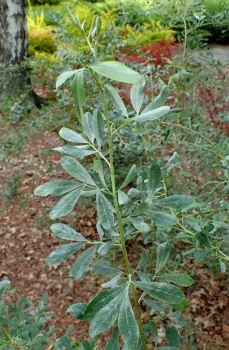
Common Salttree: A Hardy Shrub for Challenging Garden Spots
If you’re looking for a tough-as-nails shrub that laughs in the face of drought and salty conditions, the common salttree (Halimodendron halodendron) might just catch your attention. This resilient perennial shrub has made its way from the harsh steppes of Central Asia to gardens across North America, bringing with it an impressive ability to thrive where other plants simply give up.
What is Common Salttree?
Common salttree is a multi-stemmed woody shrub that typically grows 13 to 16 feet tall, though it can occasionally reach greater heights under ideal conditions. Despite its name, it’s not actually a tree – it’s a deciduous shrub with several stems arising from near the ground. You might also encounter it listed under its botanical synonym, Robinia halodendron.
Where Does It Grow?
Originally native to the salt marshes and steppes of Central Asia, including Kazakhstan and Mongolia, common salttree has established itself in scattered locations across North America. You’ll find it growing in California, Saskatchewan, Iowa, Montana, North Dakota, Oklahoma, and Utah. As a non-native species, it reproduces on its own in the wild and tends to persist once established.
- Species observed
- No observations
Should You Plant Common Salttree?
The answer depends on your specific garden needs and philosophy about native plants. Here’s what to consider:
Reasons You Might Want It:
- Exceptional drought tolerance once established
- Thrives in salty soils where other plants struggle
- Attractive silvery-gray foliage provides interesting texture
- Pretty pink to purple pea-like flowers appear in spring and early summer
- Low maintenance requirements
- Hardy in USDA zones 3-8
- Provides nectar for bees and other pollinators
Reasons You Might Skip It:
- It’s not native to North America
- Limited wildlife benefits compared to native alternatives
- May not fit well in naturalized or native plant gardens
Native Alternatives to Consider
If you’re leaning toward native plants, consider these drought-tolerant shrubs instead:
- Serviceberry (Amelanchier species) for similar spring flowers
- Sumac (Rhus species) for drought tolerance
- Native willows for salt tolerance in appropriate regions
Perfect Garden Spots for Common Salttree
Common salttree shines in challenging locations where other shrubs might struggle. It’s ideal for:
- Xeriscaping and drought-tolerant landscapes
- Rock gardens and Mediterranean-style gardens
- Coastal areas with salt spray
- Roadside plantings where salt runoff is a concern
- Slopes and areas with poor, well-draining soil
Growing Conditions
Common salttree is refreshingly undemanding once you understand its preferences:
- Sunlight: Full sun is essential for best growth and flowering
- Soil: Well-draining soil is crucial; it tolerates poor, sandy, or rocky soils
- Water: Drought-tolerant once established; avoid overwatering
- Salt tolerance: Excellent tolerance for salty conditions
- Climate: Hardy in USDA zones 3-8
Planting and Care Tips
Getting common salttree established is straightforward if you follow these guidelines:
Planting:
- Plant in spring after the last frost
- Choose a sunny location with excellent drainage
- Dig a hole twice as wide as the root ball but no deeper
- Backfill with native soil – no need for amendments
Ongoing Care:
- Water regularly the first year to establish roots
- Once established, water only during extended dry periods
- Prune lightly after flowering to maintain shape
- No fertilizer needed – this shrub prefers lean conditions
- Watch for root suckers and remove if unwanted
The Bottom Line
Common salttree is a reliable choice for gardeners dealing with challenging conditions like drought, poor soil, or salt exposure. While it’s not native to North America, it’s not known to be invasive either. If you need a tough shrub for a difficult spot and aren’t focused exclusively on native plants, it could be worth considering. However, if supporting native ecosystems is a priority, exploring native alternatives might be the better path forward.
Whatever you choose, remember that the best garden is one that works for your specific conditions, maintenance preferences, and gardening goals!