Common St. Johnswort: The Golden Herb That’s Both Blessing and Challenge
If you’ve ever spotted cheerful yellow flowers dotting roadsides and meadows in summer, chances are you’ve encountered common St. Johnswort (Hypericum perforatum). This perennial herb has quite the reputation – beloved by herbalists for centuries, yet viewed with caution by land managers. Let’s dive into what makes this golden bloomer tick and whether it deserves a spot in your garden.
What Exactly Is Common St. Johnswort?
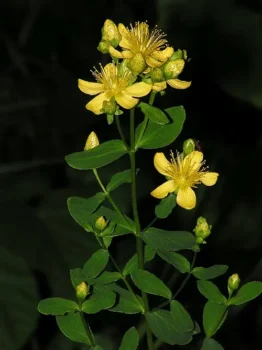
Common St. Johnswort is a perennial forb, which is just a fancy way of saying it’s a non-woody herbaceous plant that comes back year after year. Unlike shrubs or trees, it lacks significant woody tissue and instead relies on underground buds to regenerate each season. The plant produces distinctive bright yellow flowers with five petals and prominent stamens that create a sunny, almost star-like appearance.
Where Does It Come From?
Here’s where things get interesting – common St. Johnswort isn’t actually native to North America. This European native made its way across the Atlantic and has thoroughly established itself across the continent. It’s now found from coast to coast, thriving in Canada, the lower 48 states, Hawaii, and even St. Pierre and Miquelon.
The plant has spread to an impressive list of locations: British Columbia, Manitoba, New Brunswick, Arkansas, California, Nova Scotia, Ontario, Colorado, Prince Edward Island, Connecticut, Quebec, Delaware, District of Columbia, Georgia, Hawaii, Idaho, Illinois, Indiana, Iowa, Kansas, Kentucky, Louisiana, Maine, Maryland, Massachusetts, Michigan, Minnesota, Mississippi, Missouri, Montana, Nebraska, Nevada, New Hampshire, New Jersey, New Mexico, New York, North Carolina, North Dakota, Ohio, Oklahoma, Oregon, Pennsylvania, Rhode Island, South Carolina, South Dakota, Tennessee, Texas, Vermont, Virginia, Washington, West Virginia, Wisconsin, Wyoming, and Newfoundland.
- Species observed
- No observations
Should You Grow It in Your Garden?
This is where common St. Johnswort gets complicated. On one hand, it’s undeniably attractive and useful. On the other hand, its enthusiastic spreading nature means it can quickly take over if left unchecked.
The Pros:
- Gorgeous golden-yellow flowers that bloom from summer through fall
- Excellent pollinator plant – bees and butterflies love it
- Historic medicinal uses (though always consult healthcare providers)
- Extremely low maintenance and drought tolerant
- Thrives in USDA zones 3-9
The Cons:
- Can spread aggressively through both seeds and underground runners
- May crowd out other plants in naturalized settings
- Not native to North America
Where Does St. Johnswort Like to Live?
Common St. Johnswort is remarkably adaptable when it comes to moisture conditions. Across most regions, it’s classified as facultative upland, meaning it usually prefers drier sites but can tolerate some wetness. In areas like the Great Plains, Caribbean, Hawaii, and parts of the Northeast, it’s considered obligate upland – almost never found in wetlands. Only in the Eastern Mountains and Piedmont region is it truly facultative, equally happy in wet or dry conditions.
Growing Common St. Johnswort Successfully
If you decide to grow common St. Johnswort, here’s what you need to know:
Ideal Growing Conditions:
- Full sun to partial shade (though it flowers best in full sun)
- Well-draining soil – it’s quite drought tolerant once established
- pH adaptable, but prefers neutral to slightly alkaline conditions
- Hardy in zones 3-9
Planting and Care Tips:
- Start with purchased plants or seeds in spring
- Space plants 12-18 inches apart
- Water regularly the first year, then only during extended droughts
- Deadhead flowers to prevent excessive self-seeding if spread is a concern
- Divide clumps every 3-4 years to maintain vigor
A Word About Wildlife and Pollinators
One of common St. Johnswort’s redeeming qualities is its value to pollinators. The bright yellow flowers are magnets for bees, butterflies, and other beneficial insects. The abundant pollen and nectar make it a valuable food source during its long blooming period.
Consider Native Alternatives
Given its non-native status and aggressive spreading tendency, you might want to consider native alternatives that offer similar benefits:
- Wild bergamot (Monarda fistulosa) for pollinator appeal
- Black-eyed Susan (Rudbeckia species) for yellow summer blooms
- Native sunflowers (Helianthus species) for bright yellow flowers
The Bottom Line
Common St. Johnswort is undeniably beautiful and useful, but it comes with responsibilities. If you choose to grow it, be prepared to manage its spread and consider whether native alternatives might better serve your garden’s ecosystem. In herb gardens or controlled settings where you can manage its enthusiasm, it can be a lovely addition. Just remember – with great flower power comes great responsibility!
Whether you’re drawn to its sunny disposition, pollinator appeal, or historical significance, common St. Johnswort certainly makes its presence known. The key is deciding whether you’re ready for such an assertive garden companion.