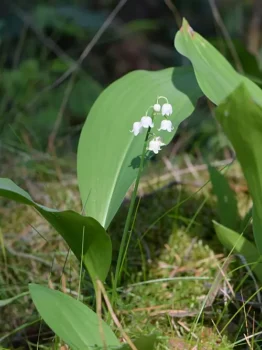
Convallaria: The Classic Shade Garden Beauty
If you’ve ever wandered through a shaded garden in late spring and caught a whiff of an intoxicatingly sweet fragrance, you might have encountered Convallaria, better known as Lily of the Valley. This charming perennial has been gracing gardens for centuries with its delicate white bell-shaped flowers and lush green foliage.
What is Convallaria?
Convallaria is a herbaceous perennial forb that lacks significant woody tissue, making it a true herbaceous plant. As a perennial, it returns year after year, slowly spreading to form attractive colonies in shaded areas. The plant produces distinctive heart-shaped leaves and drooping clusters of fragrant, bell-shaped white flowers that bloom in late spring.
Native Status and Distribution
While Convallaria has become a beloved garden plant across North America, it’s important to know that this species is not native to our continent. Originally from the cool temperate regions of Europe and Asia, Convallaria has been introduced to North America where it has naturalized in many areas. In Canada, it reproduces spontaneously and persists in the wild, while its status in the lower 48 states varies by region.
You can find established populations of Convallaria across a wide range of locations, including Alabama, Arkansas, Connecticut, Delaware, Georgia, Illinois, Indiana, Iowa, Kansas, Kentucky, Maine, Maryland, Massachusetts, Michigan, Minnesota, Missouri, Montana, New Hampshire, New Jersey, New York, North Carolina, Ohio, Oregon, Pennsylvania, Rhode Island, Tennessee, Utah, Vermont, Virginia, Washington, West Virginia, and Wisconsin. In Canada, it grows in New Brunswick, Nova Scotia, Ontario, Prince Edward Island, Quebec, Saskatchewan, and Newfoundland.
- Species observed
- No observations
Why Gardeners Love Convallaria
There are several reasons why Convallaria has maintained its popularity among gardeners:
- Fragrant flowers: The sweet, intense fragrance of the bell-shaped blooms is unmatched in the shade garden
- Low maintenance: Once established, it requires minimal care
- Shade tolerance: Thrives in partial to full shade where many other flowering plants struggle
- Ground cover potential: Spreads slowly to form attractive colonies
- Attractive foliage: The heart-shaped leaves provide beautiful texture even when not in bloom
Growing Conditions and Care
Convallaria is surprisingly easy to grow if you can provide the right conditions. This woodland plant thrives in USDA hardiness zones 2-7, making it suitable for cooler climates.
Light requirements: Partial to full shade is ideal. Too much sun can scorch the delicate leaves and reduce flowering.
Soil needs: Moist, well-draining soil rich in organic matter works best. The plant appreciates consistent moisture but won’t tolerate waterlogged conditions.
Planting tips: Plant rhizomes in fall, spacing them about 4-6 inches apart. The growing tips should be just below the soil surface.
Garden Design and Landscape Role
Convallaria excels as a ground cover in shaded woodland gardens, naturalized areas, and under trees where grass struggles to grow. Its slow-spreading habit makes it ideal for creating drifts of fragrant spring color. The plant typically reaches 6-8 inches in height and spreads gradually by underground rhizomes.
Consider using Convallaria in:
- Woodland gardens
- Shade borders
- Under deciduous trees
- Naturalized areas
- Cottage garden settings
Wildlife and Pollinator Benefits
While Convallaria does produce nectar and may attract some small pollinators during its blooming period, it’s not considered a major pollinator plant. The flowers primarily attract smaller insects, but the plant’s overall contribution to local wildlife is limited compared to native alternatives.
Important Considerations
Since Convallaria is non-native, gardeners interested in supporting local ecosystems might want to consider native alternatives that provide similar aesthetic appeal while offering greater benefits to local wildlife. Some excellent native options for shaded areas include wild ginger, bloodroot, or native violets, depending on your region.
It’s also worth noting that all parts of Convallaria are toxic if ingested, so exercise caution if you have children or pets who might be tempted to sample garden plants.
The Bottom Line
Convallaria can be a lovely addition to shade gardens, offering unmatched fragrance and classic beauty. While it’s not native to North America, it’s generally well-behaved in garden settings. However, if you’re looking to maximize benefits for local wildlife and ecosystems, consider exploring native alternatives that can provide similar aesthetic appeal while supporting your region’s natural heritage.