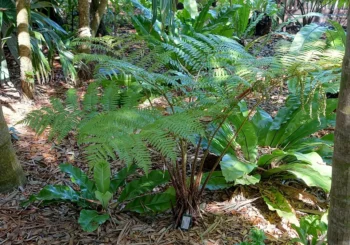
Cooper’s Cyathea: The Majestic Tree Fern That Brings Prehistoric Drama to Your Garden
If you’ve ever dreamed of creating a garden that feels like a scene from Jurassic Park, meet Cooper’s cyathea (Cyathea cooperi) – a stunning tree fern that’s guaranteed to make your neighbors do a double-take. This towering beauty brings an unmistakable prehistoric flair to any landscape, though it comes with some considerations worth knowing before you plant.
What Exactly Is Cooper’s Cyathea?
Cooper’s cyathea is a perennial tree fern that can grow into quite the showstopper. Unlike your typical garden ferns that hug the ground, this species develops a proper trunk and can tower 13-16 feet high (sometimes even taller in ideal conditions). Its massive, arching fronds can stretch 6-10 feet long, creating an elegant canopy that screams tropical paradise.
You might also see this plant listed under its synonym Sphaeropteris cooperi, but don’t let the scientific name shuffle confuse you – it’s the same magnificent fern.
Where Does It Come From?
Originally from Australia (specifically Queensland and New South Wales), Cooper’s cyathea has made itself at home in several U.S. states. You’ll find established populations in California, Florida, and Hawaii, where it reproduces on its own in the wild.
- Species observed
- No observations
Since this fern isn’t native to the United States, it’s worth considering native alternatives that can provide similar dramatic effect while supporting local ecosystems. Look into native tree ferns in your region if available, or consider other native plants that offer bold, architectural presence.
The Garden Appeal Factor
Let’s be honest – Cooper’s cyathea is absolutely stunning. Its graceful, symmetrical crown of fronds creates an instant focal point that transforms any garden into something special. The plant works beautifully as:
- A dramatic specimen plant in tropical or subtropical gardens
- A stunning backdrop in shade gardens
- An architectural element in woodland landscapes
- A conversation starter that adds vertical interest to your design
Growing Conditions: What This Fern Craves
Cooper’s cyathea isn’t exactly low-maintenance, but the payoff is worth it if you can meet its needs. This fern is happiest in USDA hardiness zones 9b through 11, though it can tolerate brief light frosts with protection.
Here’s what it loves:
- Light: Partial to full shade (harsh direct sun will scorch those beautiful fronds)
- Moisture: Consistent water and high humidity – think tropical rainforest vibes
- Soil: Well-draining but moisture-retentive soil rich in organic matter
- Protection: Shelter from strong winds that can damage the large fronds
Planting and Care Tips
Ready to give this prehistoric beauty a try? Here’s how to set it up for success:
- Location, location, location: Choose a spot with morning sun and afternoon shade, protected from harsh winds
- Soil prep: Amend your soil with plenty of compost or organic matter to improve both drainage and water retention
- Watering: Keep soil consistently moist but not waterlogged – think damp sponge rather than swimming pool
- Mulching: Apply a thick layer of organic mulch to help retain moisture and regulate soil temperature
- Winter care: In cooler zones, provide frost protection with burlap or frost cloth during cold snaps
Wildlife and Pollinator Considerations
As a fern, Cooper’s cyathea doesn’t produce flowers, so it won’t directly attract pollinators like bees and butterflies. However, its large fronds can provide shelter for various small creatures and birds, adding some wildlife value to your garden ecosystem.
The Bottom Line
Cooper’s cyathea is undeniably gorgeous and can create an incredible tropical atmosphere in the right garden. However, since it’s not native to the U.S., consider whether native alternatives might better serve both your landscape goals and local wildlife. If you do choose to grow it, make sure you can provide the consistent moisture and protection it needs to thrive.
Remember, gardening is about creating spaces that bring you joy while being mindful of the broader ecosystem. Whatever you choose to plant, make sure it’s something you’ll love tending for years to come!