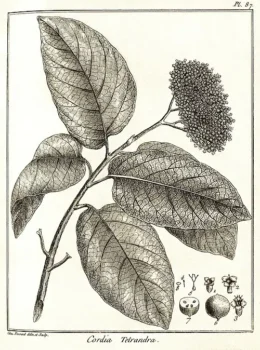
Understanding Cordia: A Diverse Genus That Needs Closer Look
If you’ve come across the name Cordia in your plant research, you might be scratching your head trying to figure out exactly what you’re dealing with. That’s completely understandable – and here’s why: Cordia isn’t actually a single plant species, but rather an entire genus containing hundreds of different trees and shrubs!
What Exactly Is Cordia?
Cordia is a large genus in the borage family (Boraginaceae) that includes perennial woody plants ranging from small shrubs to large trees. These plants are typically multi-stemmed and can grow anywhere from a few feet to well over 16 feet in height, depending on the specific species and growing conditions.
The genus is incredibly diverse, with species found in tropical and subtropical regions around the world. In the United States, various Cordia species can be found in Arizona, Florida, Hawaii, Texas, as well as in U.S. territories including Palau, Puerto Rico, and the Virgin Islands.
- Species observed
- No observations
The Challenge of Growing Cordia
Here’s where things get tricky for gardeners: without knowing the specific species of Cordia you’re interested in, it’s nearly impossible to give you accurate growing advice. Different Cordia species have vastly different requirements when it comes to:
- Climate preferences and hardiness zones
- Soil requirements
- Water needs
- Size at maturity
- Native vs. non-native status in your area
- Potential invasiveness
Before You Plant: Do Your Species-Specific Research
If you’re considering adding a Cordia to your landscape, your first step should be identifying the exact species you’re interested in. Some questions to investigate:
- Is this species native to your region?
- What are its mature size expectations?
- Does it have any invasive tendencies in your area?
- What specific growing conditions does it prefer?
- Are there native alternatives that might serve the same purpose?
A Word of Caution
Because the native status, invasive potential, and growing requirements of Cordia species vary so dramatically, we can’t provide blanket recommendations for the entire genus. Some species might be wonderful additions to certain landscapes, while others could become problematic in specific regions.
Moving Forward
If you’re drawn to plants in the Cordia genus, we recommend:
- Consulting with local native plant societies or extension offices
- Researching the specific species name (it should have two parts, like Cordia sebestena)
- Checking with local nurseries that specialize in native or well-suited plants for your region
- Considering native alternatives that provide similar aesthetic or ecological benefits
Remember, successful gardening starts with choosing the right plant for your specific location and needs – and that requires species-specific information that goes beyond the genus level!