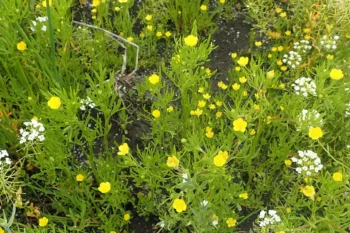
Corn Buttercup: A Cheerful Yellow Wildflower for Naturalized Gardens
If you’re looking for a low-maintenance wildflower that brings bright yellow blooms to your garden, corn buttercup (Ranunculus arvensis) might catch your eye. This cheerful little annual has been making itself at home in American gardens and wild spaces for generations, though it originally hails from across the pond in Europe and the Mediterranean.
What Is Corn Buttercup?
Corn buttercup is a small, herbaceous annual that belongs to the buttercup family. True to its name, it produces those classic bright yellow, five-petaled flowers that seem to capture sunshine in each bloom. The plant stays relatively compact, making it a nice choice for filling in gaps or adding early season color to naturalized areas.
As an annual or sometimes biennial forb, corn buttercup completes its entire life cycle within one or two growing seasons. It’s the kind of plant that doesn’t require woody stems or complex root systems – just good old-fashioned herbaceous growth that gets the job done efficiently.
Where Does Corn Buttercup Grow?
This adaptable little plant has spread far and wide across the United States, establishing populations in 24 states from coast to coast. You’ll find it growing everywhere from Alabama and Arkansas to Washington and West Virginia, with stops in California, Illinois, Montana, and many states in between.
- Species observed
- No observations
While corn buttercup isn’t native to North America, it has naturalized successfully without becoming problematic. It tends to thrive in disturbed soils and can handle a variety of growing conditions, which explains its widespread distribution.
Growing Conditions and Care
One of the best things about corn buttercup is its easy-going nature. This plant is quite forgiving and doesn’t demand premium growing conditions to thrive.
Moisture Preferences
Corn buttercup shows remarkable flexibility when it comes to moisture levels. Depending on your region, it can handle:
- Drier upland conditions (especially in western regions)
- Moderate moisture levels in most areas
- Occasional wet conditions in some regions
Soil and Sun Requirements
This adaptable wildflower performs well in:
- Full sun to partial shade
- Poor to average soils
- Disturbed or compacted ground where other plants struggle
- USDA hardiness zones 3-9
Benefits for Pollinators and Wildlife
Don’t let its small size fool you – corn buttercup pulls its weight when it comes to supporting local wildlife. The bright yellow flowers provide nectar and pollen for various small pollinators, including bees and beneficial flies. Early in the growing season when other flowers may be scarce, these cheerful blooms can offer an important food source.
Garden Design Ideas
Corn buttercup works well in several garden settings:
- Cottage gardens: Adds informal charm with its self-seeding habit
- Naturalized areas: Perfect for filling in rough spots or edges
- Meadow gardens: Contributes early season color to wildflower mixes
- Problem areas: Thrives where soil is poor or compacted
Planting and Maintenance
Growing corn buttercup is refreshingly straightforward. As a self-seeding annual, it often takes care of propagation on its own once established. Seeds can be direct-sown in fall or early spring, and the plant typically requires minimal care beyond occasional watering during dry spells.
Keep in mind that corn buttercup can spread readily in suitable conditions, so you’ll want to consider whether this fits your garden goals. If you prefer more controlled plantings, you can always deadhead flowers before they set seed.
Should You Plant Corn Buttercup?
Corn buttercup can be a delightful addition to informal, naturalized gardens where its self-seeding habit is welcome rather than problematic. It’s particularly valuable in challenging sites where native alternatives might struggle to establish.
However, if you’re passionate about supporting native ecosystems, consider these native alternatives that provide similar benefits:
- Wild columbine (Aquilegia canadensis) for shaded areas
- Lance-leaved coreopsis (Coreopsis lanceolata) for sunny spots
- Black-eyed Susan (Rudbeckia species) for reliable yellow blooms
- Native buttercups like swamp buttercup (Ranunculus hispidus) where appropriate
Whether you choose corn buttercup or a native alternative, the important thing is creating spaces that support pollinators and bring joy to your gardening experience. Sometimes the most successful gardens are those that embrace a mix of well-behaved plants, regardless of their passport status!