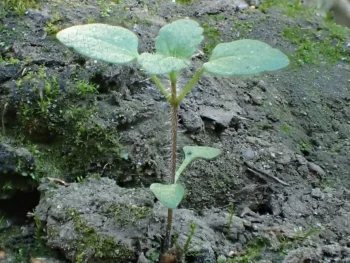
Corn Speedwell: A Tiny Ground Cover with Big Personality
If you’ve ever spotted a carpet of tiny white flowers covering disturbed soil or popping up between sidewalk cracks, you’ve likely encountered corn speedwell (Veronica arvensis). This diminutive annual has quite the reputation for showing up uninvited, but don’t let that fool you – this little plant has some redeeming qualities that might surprise you.
What Exactly is Corn Speedwell?
Corn speedwell is a small annual forb, which is just a fancy way of saying it’s a non-woody plant that completes its entire life cycle in one growing season. Originally hailing from Europe and western Asia, this little wanderer has made itself quite at home across North America, from Alaska to Hawaii and everywhere in between.
As a non-native species, corn speedwell has successfully established itself throughout the United States and Canada, including Alaska, all the lower 48 states, Hawaii, and multiple Canadian provinces from British Columbia to Newfoundland. It’s one of those plants that seems to pop up just about everywhere.
- Species observed
- No observations
The Look and Feel
Don’t expect corn speedwell to make a bold statement in your garden – this is definitely a less is more kind of plant. It forms low-growing mats that rarely exceed a few inches in height, with tiny oval leaves and delicate four-petaled flowers that are typically white or pale blue. The flowers are small – we’re talking really small – but they appear consistently from spring through fall, giving the plant a charming, if understated, presence.
Where Does Corn Speedwell Like to Live?
Here’s where things get interesting from a gardener’s perspective. Corn speedwell is remarkably adaptable when it comes to moisture conditions:
- In most regions, it’s classified as facultative upland, meaning it usually prefers drier conditions but can handle some moisture
- In the Atlantic and Gulf Coastal Plain and Eastern Mountains regions, it’s obligate upland – almost never found in wet areas
- In Hawaii, it’s more flexible and can handle both wet and dry conditions
This adaptability extends to its growing preferences too. Corn speedwell thrives in full sun to partial shade and is surprisingly drought tolerant once established. It’s not picky about soil quality either – in fact, it seems to prefer poor, disturbed soils where other plants struggle.
Should You Plant Corn Speedwell?
This is where things get a bit complicated. As a non-native species, corn speedwell isn’t necessarily the best choice if you’re trying to create a native plant garden that supports local wildlife. However, it’s not currently listed as invasive or noxious, so it occupies that middle ground that many gardeners find themselves navigating.
Reasons you might want corn speedwell:
- Extremely low maintenance ground cover
- Fills in gaps between pavers or in rock gardens
- Provides some pollinator benefits for small beneficial insects
- Thrives in poor soil where other plants fail
- Self-seeds readily, so it comes back year after year
Reasons you might want to skip it:
- Not native, so it doesn’t provide the same wildlife benefits as indigenous plants
- Can be weedy and spread beyond where you want it
- Very small flowers provide limited visual impact
Growing Corn Speedwell Successfully
If you decide to give corn speedwell a try, you’ll find it’s refreshingly easy to grow. This plant is suitable for USDA hardiness zones 3-9, though as an annual, it’s more about the growing season than winter survival.
Planting and Care Tips:
- Sow seeds directly in spring after the last frost
- Choose a sunny to partially shaded location
- Don’t worry too much about soil preparation – this plant actually prefers poor soil
- Water lightly until established, then let nature take over
- Expect it to self-seed readily for next year’s crop
The beauty of corn speedwell is that it requires virtually no care once established. It’s drought tolerant, doesn’t need fertilization, and will happily reseed itself wherever conditions are suitable.
A Word About Native Alternatives
While corn speedwell isn’t problematic, you might consider native alternatives that provide similar ground-covering benefits while supporting local ecosystems. Look into native violets, wild strawberry, or native sedges depending on your region – these will give you that low-growing coverage while providing better wildlife benefits.
The Bottom Line
Corn speedwell is one of those plants that falls into the perfectly acceptable but not exciting category. It’s not going to win any garden design awards, but it’s also not going to cause you any headaches. If you need a tough, low-maintenance ground cover for a challenging spot and don’t mind its non-native status, corn speedwell might just fit the bill. Just be prepared for it to show up in places you didn’t plant it – that’s part of its charm, whether you see it that way or not!