Long-Fruited Bloodwood: A Stunning Australian Native for Warm Climate Gardens
Meet the Long-fruited Bloodwood (Corymbia polycarpa), a spectacular Australian native tree that’s slowly gaining recognition among gardeners who appreciate unique bark textures and drought-tolerant beauties. While it might not be the most well-known eucalyptus relative, this tree has some serious wow factor that makes it worth considering for the right garden setting.
What Makes This Tree Special?
The Long-fruited Bloodwood isn’t your average backyard tree. Originally classified as Eucalyptus polycarpa, this stunning specimen belongs to the Corymbia genus and brings a touch of the Australian outback to suitable climates. What really sets it apart is its absolutely gorgeous bark that peels away in patches, revealing a smooth, multi-colored trunk underneath – think of it as nature’s own abstract art piece that changes throughout the year.
The tree typically grows to a respectable 25-50 feet tall with a spreading canopy that provides excellent shade once mature. Its growth rate is moderate, so you won’t be waiting forever to enjoy its benefits, but you also won’t be surprised by sudden giant growth spurts.
Where Does It Come From?
This beauty calls the northern regions of Australia home, particularly thriving in the Northern Territory and Western Australia. In its native habitat, it’s adapted to some pretty tough conditions – think hot, dry summers and minimal rainfall – which makes it an excellent choice for water-wise gardening.
Garden Appeal and Landscape Role
The Long-fruited Bloodwood really shines as a specimen tree where its unique bark and form can be fully appreciated. Here’s what makes it garden-worthy:
- Stunning decorative bark that provides year-round visual interest
- Large, showy white to cream flowers that appear in clusters
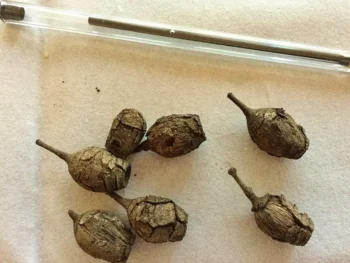
- Distinctive long seed pods that give the tree its common name
- Excellent shade tree for larger properties
- Outstanding drought tolerance once established
This tree works beautifully in Australian native gardens, xerophytic landscapes, or as a focal point in Mediterranean-style designs. Just keep in mind that it needs room to spread – this isn’t a tree for small urban lots.
Growing Conditions and Care
The Long-fruited Bloodwood is refreshingly low-maintenance once you get the basics right:
- Sunlight: Full sun is essential – this tree won’t tolerate shade well
- Soil: Well-draining soil is absolutely critical; it won’t survive in waterlogged conditions
- Water: Drought tolerant once established, but needs regular water during the first few years
- Climate: Best suited for USDA zones 9-11; cannot tolerate hard frosts
Planting and Care Tips
Getting your Long-fruited Bloodwood off to a good start is pretty straightforward:
- Plant in spring after the last frost danger has passed
- Choose a location with excellent drainage – consider raised planting if your soil tends to stay wet
- Protect young trees from frost for the first few winters
- Water regularly during establishment (first 2-3 years), then reduce frequency
- Minimal pruning needed – just remove dead or damaged branches
- No fertilizer necessary in most soils
Wildlife and Pollinator Benefits
This tree isn’t just pretty – it’s also a wildlife magnet. The nectar-rich flowers are absolute bee magnets and attract various other pollinators. Birds love the seeds and often use the sturdy branches for nesting. If you’re trying to create a wildlife-friendly garden, the Long-fruited Bloodwood delivers on multiple fronts.
Is This Tree Right for Your Garden?
The Long-fruited Bloodwood is perfect if you:
- Live in a warm, frost-free or minimal frost climate
- Have space for a medium to large tree
- Want a drought-tolerant, low-maintenance specimen
- Appreciate unique bark textures and native plant gardening
- Have well-draining soil or can create it
However, you might want to look elsewhere if you have a small garden, live in a climate with hard frosts, or have poorly draining soil that can’t be amended.
For gardeners outside Australia, consider this tree as an interesting addition to appropriate climates, but also explore native alternatives that might provide similar benefits while supporting local ecosystems. Your local native plant society can help you find drought-tolerant native trees with equally stunning characteristics.
The Bottom Line
The Long-fruited Bloodwood offers a unique combination of ornamental appeal, wildlife value, and low-maintenance growing requirements that make it a winner for the right situation. Its stunning bark alone makes it worthy of consideration, and the added benefits of drought tolerance and pollinator support make it even more appealing. Just make sure you have the space and climate to let this Australian beauty truly shine.