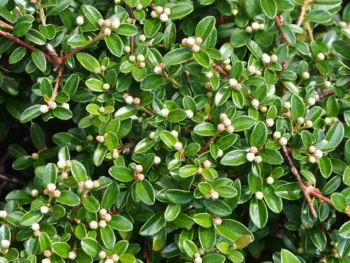
Cotoneaster: A Hardy Shrub for Low-Maintenance Gardens
If you’re looking for a tough, no-fuss shrub that can handle challenging growing conditions while still putting on a beautiful show, cotoneaster might be worth considering. This perennial shrub has made itself at home in gardens across North America, though it’s important to know its story before deciding whether it belongs in your landscape.
What Exactly is Cotoneaster?
Cotoneaster is a multi-stemmed woody shrub that typically stays under 13-16 feet tall, making it perfect for a variety of garden roles. As a perennial, it comes back year after year, developing a mature, established look that many gardeners appreciate. The plant has several stems that arise from or near the ground, creating a full, bushy appearance that works well in both formal and informal settings.
The Non-Native Reality
Here’s something important to know upfront: cotoneaster isn’t native to North America. This Asian native has been introduced and now reproduces spontaneously in the wild across Canada, Hawaii, and the lower 48 states without human help. While this demonstrates its remarkable adaptability, it also means it’s not providing the same ecological benefits as native plants would.
Where You’ll Find Cotoneaster Growing
Cotoneaster has established itself across a impressive range of locations, including Alberta, British Columbia, Manitoba, Ontario, Quebec, Saskatchewan, California, Colorado, Hawaii, Idaho, Illinois, Indiana, Iowa, Kentucky, Massachusetts, Montana, New York, Ohio, Oregon, Pennsylvania, Washington, Wisconsin, and Wyoming. This wide distribution speaks to its hardy nature and ability to adapt to various climates and conditions.
- Species observed
- No observations
Why Gardeners Choose Cotoneaster
Despite its non-native status, cotoneaster has earned a place in many gardens for several practical reasons:
- Extremely low maintenance once established
- Drought tolerant, perfect for water-wise gardening
- Attractive flowers in spring that pollinators enjoy
- Colorful berries in fall that add seasonal interest
- Excellent for erosion control on slopes
- Works well in rock gardens and challenging spots
Growing Cotoneaster Successfully
One of cotoneaster’s biggest selling points is how easy it is to grow. This shrub thrives in full sun to partial shade and isn’t picky about soil as long as it drains well. Once established, it can handle drought conditions remarkably well, making it ideal for gardeners who want beauty without the fuss.
The plant typically performs well in USDA hardiness zones 4-8, though this can vary depending on the specific variety. Its adaptable nature means it can handle a range of temperatures and growing conditions that might challenge more finicky plants.
Care and Maintenance Tips
Caring for cotoneaster is refreshingly straightforward:
- Plant in well-draining soil – soggy conditions are its main enemy
- Water regularly the first year, then reduce as it establishes
- Prune lightly after flowering if needed to maintain shape
- Watch for fire blight, though it’s generally disease-resistant
- Mulch around the base to retain moisture and suppress weeds
Garden Design Ideas
Cotoneaster shines in several garden situations. It’s excellent for rock gardens where its hardy nature and attractive form can be showcased. On slopes, it provides both erosion control and visual appeal. In borders, it offers structure and seasonal interest without overwhelming neighboring plants. Its low-maintenance nature makes it particularly valuable in areas where you want something attractive but don’t want to spend a lot of time on upkeep.
Consider Native Alternatives
While cotoneaster can be a practical choice for challenging garden spots, consider exploring native alternatives that could provide similar benefits while supporting local ecosystems. Native shrubs like serviceberry, elderberry, or regional native roses might offer the hardiness and beauty you’re seeking while providing better habitat for local wildlife.
The Bottom Line
Cotoneaster represents a classic gardening trade-off: it’s undeniably tough, reliable, and attractive, but it doesn’t contribute to native ecosystems the way indigenous plants do. If you’re dealing with a particularly challenging site where native options have failed, or if you’re inheriting established cotoneaster plantings, they can certainly earn their keep in the garden. Just be aware of what you’re choosing and consider native alternatives when possible. Whatever you decide, you’ll find cotoneaster to be a remarkably undemanding garden companion that delivers consistent results with minimal effort.