Cotoneaster rotundifolius: A Himalayan Ground Cover for Rock Gardens
If you’re searching for a tough, low-maintenance ground cover that can handle challenging conditions, you might have stumbled across Cotoneaster rotundifolius. This lesser-known member of the Cotoneaster family hails from the rugged Himalayan mountains and brings a unique character to specialized garden settings.
Origins and Natural Habitat
Cotoneaster rotundifolius calls the Himalayan region home, naturally occurring across Nepal, northern India, and Tibet. In these mountainous landscapes, it has adapted to thrive in rocky, well-drained soils and variable weather conditions. This hardy background makes it particularly interesting for gardeners dealing with challenging growing conditions.
What Makes It Special
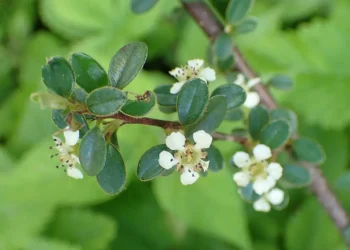
This Cotoneaster species offers a delightful progression of seasonal interest. In spring, clusters of small white flowers create a subtle but charming display that attracts bees and other pollinators. As the seasons progress, these blooms transform into bright red-orange berries that add autumn color and provide food for birds. The small, rounded leaves (hence rotundifolius, meaning round-leaved) create dense, low-growing coverage.
Garden Applications
Cotoneaster rotundifolius shines in specific garden situations:
- Rock gardens where its natural mountain origins make it right at home
- Alpine garden settings that mimic its native Himalayan environment
- Slope stabilization and erosion control projects
- Areas where you need tough, drought-tolerant ground cover
Growing Conditions and Care
This mountain native appreciates conditions that mirror its homeland:
- Sunlight: Full sun to partial shade
- Soil: Well-drained soil is essential; it won’t tolerate waterlogged conditions
- Hardiness: Thrives in USDA zones 5-8
- Water needs: Drought tolerant once established, but benefits from occasional watering during dry spells
Planting and Maintenance
The good news for busy gardeners is that Cotoneaster rotundifolius is refreshingly low-maintenance. Plant in spring or fall when temperatures are moderate. Once established, it requires minimal intervention—just occasional pruning to maintain shape if desired. The plant’s natural growth habit typically keeps it compact and tidy.
Important Considerations
Before planting any Cotoneaster species, it’s worth noting that some members of this genus have become problematic in certain regions. While specific invasive status information for Cotoneaster rotundifolius isn’t well-documented, many Cotoneaster species can spread beyond intended garden boundaries. Check with your local extension office or native plant society about the status of Cotoneaster species in your area.
If you’re looking for native alternatives that provide similar benefits, consider researching indigenous ground covers native to your region that offer comparable erosion control and wildlife benefits.
Wildlife Benefits
The small white flowers provide nectar for bees and other pollinators during the spring bloom period. Later in the season, the colorful berries offer food sources for various bird species, making this plant a contributor to local wildlife habitat when grown responsibly.
The Bottom Line
Cotoneaster rotundifolius can be a useful addition to specialized garden settings, particularly rock gardens and alpine landscapes where its mountain heritage shines. However, given the mixed track record of Cotoneaster species regarding invasiveness, it’s wise to research local regulations and consider native alternatives first. If you do choose to grow it, monitor its behavior in your landscape and be prepared to manage its spread responsibly.