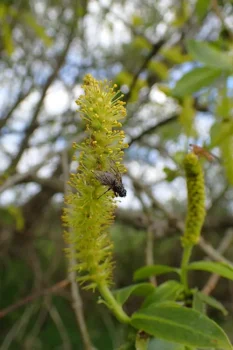
Crack Willow: A Fast-Growing Tree with Old-World Charm
If you’ve ever wondered about those graceful, drooping trees along streams and ponds, you might be looking at a crack willow (Salix fragilis). This European native has made itself quite at home across North America, becoming a familiar sight in wet areas from coast to coast. But should you plant one in your yard? Let’s dive into what makes this tree tick.
What Exactly is a Crack Willow?
The crack willow gets its quirky name from its brittle twigs that snap off easily – sometimes with an audible crack! Don’t worry, this isn’t a sign of poor health; it’s actually how the tree spreads naturally. Those broken branches can root wherever they land near water, creating new trees.
This perennial tree is quite the giant, typically reaching 50-80 feet tall with a broad, irregular crown. Its long, narrow leaves shimmer in the breeze, and in spring, it produces yellowish-green catkins that provide early nectar for hungry bees emerging from winter.
Where Does Crack Willow Grow?
Originally from Europe and western Asia, crack willow has spread far and wide across North America. You’ll find it growing in Alberta, Manitoba, New Brunswick, Nova Scotia, Ontario, Quebec, Prince Edward Island, Newfoundland, and throughout most of the United States including Colorado, Connecticut, Delaware, Idaho, Illinois, and many more states from coast to coast.
- Species observed
- No observations
The Good, The Bad, and The Beautiful
Crack willow has some undeniable charms. It grows incredibly fast, provides lovely golden fall color, and offers early-season food for pollinators when little else is blooming. Its tolerance for wet, even flooded conditions makes it valuable for erosion control along waterways.
However, there are some downsides to consider. That brittle wood we mentioned? It means branches break easily in storms, potentially creating maintenance headaches. The tree also needs lots of space – we’re talking large landscapes or parks, not your average backyard.
Growing Conditions and Care
Crack willow is surprisingly easy to please, thriving in USDA hardiness zones 4-8. Here’s what it needs to flourish:
- Moist to wet soil (it actually loves having wet feet)
- Full sun exposure
- Plenty of space to spread – think 30-40 feet wide
- Regular pruning to manage its size and remove broken branches
The good news? It’s incredibly easy to propagate from cuttings. Stick a branch in moist soil, and you’ll likely have a new tree. Just make sure you really want one (or several) before you start!
Wetland Wonder
This tree has facultative wetland status across all regions, meaning it’s equally happy in soggy soil or regular garden conditions. This adaptability is part of why it’s spread so successfully across diverse North American landscapes.
Should You Plant Crack Willow?
While crack willow isn’t invasive in most areas, it’s worth considering native alternatives that provide similar benefits while supporting local ecosystems. Native willows like black willow (Salix nigra) or peachleaf willow (Salix amygdaloides) offer comparable beauty and wildlife value while being perfectly adapted to North American conditions.
If you do choose crack willow, make sure you have the space for it and don’t mind some maintenance. It’s best suited for large properties, parks, or areas where you want fast-growing screening near water features.
The Bottom Line
Crack willow is an impressive tree with real benefits for the right situation. Its fast growth, early pollinator support, and tolerance for wet conditions make it valuable in appropriate settings. Just remember – this is a tree that thinks big, so make sure your landscape can handle its ambitions!
Whether you choose crack willow or opt for a native alternative, willows of all kinds bring grace and movement to the landscape while supporting local wildlife. The key is choosing the right tree for your specific space and goals.