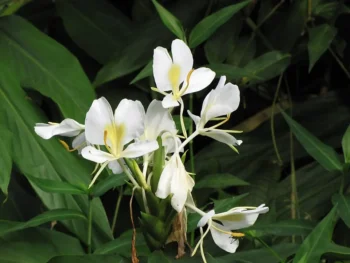
Cream Garland-Lily: A Fragrant Tropical Beauty for Your Garden
If you’ve ever dreamed of transforming your garden into a tropical paradise, the cream garland-lily (Hedychium flavescens) might just be the showstopper you’re looking for. Also known as yellow ginger, this striking perennial brings an exotic flair to landscapes with its fragrant, creamy-yellow blooms and lush foliage that whispers of distant, misty mountains.
What Is Cream Garland-Lily?
Cream garland-lily is a non-native perennial that has found a comfortable home in Hawaii, where it reproduces naturally in the wild. Originally from the Himalayan regions of Nepal, Bhutan, and northeastern India, this herbaceous plant belongs to the ginger family and creates impressive clumps of tropical-looking foliage topped with fragrant flower spikes.
As a forb (a non-woody vascular plant), cream garland-lily grows from underground rhizomes and can persist year after year with proper care. Its botanical name, Hedychium flavescens, literally translates to sweet snow and becoming yellow, which perfectly captures both its fragrance and its pale yellow blooms.
Where Does It Grow?
In the United States, cream garland-lily is primarily found growing in Hawaii, where it has established itself in various habitats. The plant shows remarkable adaptability, capable of thriving in both wetland and non-wetland conditions across multiple regions including the Arid West, Hawaii, and Western Mountains, Valleys, and Coast areas.
- Species observed
- No observations
Garden Appeal and Landscape Role
What makes cream garland-lily such a garden favorite? Here are its standout features:
- Fragrant blooms: Evening-scented, creamy-yellow flowers arranged in dense, showy spikes
- Tropical foliage: Large, lance-shaped leaves create an exotic backdrop
- Pollinator magnet: Attracts butterflies and moths with its sweet fragrance
- Versatile placement: Works as a specimen plant, background planting, or privacy screen
This plant shines in tropical and subtropical garden designs, woodland settings, and even rain gardens. Its impressive size and bold texture make it perfect for creating dramatic focal points or filling in large spaces where you want that lush, jungle-like feel.
Growing Conditions and Hardiness
Cream garland-lily is surprisingly adaptable but does have some preferences:
- Climate: Thrives in USDA zones 8-11, with possible survival in zone 7 with winter protection
- Light: Prefers partial shade to filtered sunlight
- Soil: Loves moist, well-draining soil with high organic content
- Humidity: Appreciates high humidity levels
- Wind: Benefits from protection against strong winds
Planting and Care Tips
Ready to add this tropical beauty to your garden? Here’s how to ensure success:
Planting: Plant rhizomes in spring after the last frost. Choose a location with morning sun and afternoon shade, and prepare the soil with plenty of compost or well-aged manure.
Watering: Maintain consistent moisture throughout the growing season, but avoid waterlogged conditions. Mulch heavily to retain moisture and suppress weeds.
Maintenance: Cut back flower spikes after blooming to encourage more flowers. Divide clumps every 3-4 years to prevent overcrowding and maintain vigor.
Winter care: In cooler zones, mulch heavily around the base, and consider covering with frost cloth during cold snaps.
Should You Plant It?
While cream garland-lily isn’t native to most areas where it’s grown, it’s not currently listed as invasive or problematic. However, since it can reproduce and spread naturally, it’s worth considering native alternatives that provide similar benefits to local ecosystems.
If you’re drawn to the tropical look and fragrant blooms, consider researching native gingers or other indigenous plants in your area that might offer comparable garden appeal while supporting local wildlife and pollinators.
That said, if you choose to grow cream garland-lily, you’ll be rewarded with a stunning, fragrant addition to your garden that brings a touch of exotic beauty to your outdoor space. Just remember to garden responsibly and keep an eye on its spread to ensure it doesn’t escape cultivation in your area.