Creeping Baby’s-Breath: A Delicate Alpine Groundcover for Rock Gardens
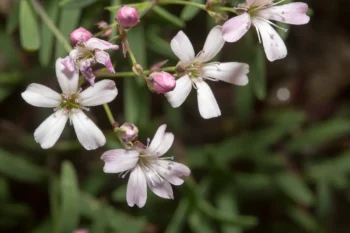
If you’re looking for a charming groundcover that brings a touch of alpine elegance to your garden, creeping baby’s-breath (Gypsophila repens) might catch your eye. This low-growing perennial creates clouds of tiny white or pink flowers that seem to float above its mat-forming foliage, earning it a special place in rock gardens and alpine landscapes across cooler regions.
What is Creeping Baby’s-Breath?
Creeping baby’s-breath is a herbaceous perennial that forms spreading mats of small, narrow leaves topped with delicate sprays of star-shaped flowers. Unlike its taller cousin commonly used in floral arrangements, this species stays close to the ground, reaching just 4-8 inches in height while spreading 12-18 inches wide. The flowers bloom in early to mid-summer, creating a frothy display that adds texture and softness to garden compositions.
Native Status and Distribution
Originally from the European Alps and mountainous regions of southern Europe, creeping baby’s-breath is a non-native species that has naturalized in parts of North America. In Canada and the United States, you’ll find established populations in British Columbia, Ontario, and Maine, where it has adapted well to similar growing conditions.
- Species observed
- No observations
Why Gardeners Choose Creeping Baby’s-Breath
This alpine beauty offers several appealing qualities for the right garden setting:
- Low maintenance: Once established, it requires minimal care and watering
- Drought tolerant: Perfect for water-wise gardening approaches
- Delicate beauty: Adds airy texture without overwhelming other plants
- Pollinator friendly: Small bees and butterflies appreciate the nectar-rich flowers
- Cold hardy: Thrives in USDA zones 3-7
Ideal Garden Settings
Creeping baby’s-breath shines brightest in specific garden styles:
- Rock gardens: Naturalizes beautifully among stones and boulders
- Alpine gardens: Mimics its mountain habitat perfectly
- Xerophytic landscapes: Excellent for dry, well-draining areas
- Border edges: Softens hard lines with its cascading growth
Growing Conditions and Care
Success with creeping baby’s-breath comes down to mimicking its alpine origins:
- Soil: Well-draining, alkaline to neutral soil is essential
- Sunlight: Full sun produces the best flowering
- Water: Drought tolerant once established; avoid overwatering
- Climate: Hardy in zones 3-7, preferring cooler summers
Planting and Care Tips
Getting started with creeping baby’s-breath is straightforward:
- Plant in spring after the last frost
- Amend heavy clay soils with gravel or coarse sand for drainage
- Space plants 12-18 inches apart to allow for spreading
- Water regularly the first season, then reduce watering
- Deadhead spent flowers to encourage more blooms
- Allow some flowers to set seed if you want natural spreading
Consider Native Alternatives
While creeping baby’s-breath isn’t considered invasive, supporting native plant communities benefits local wildlife and ecosystems. Consider these native groundcover alternatives that offer similar aesthetic appeal:
- Wild strawberry (Fragaria species) for spreading groundcover with white flowers
- Pussytoes (Antennaria species) for silvery foliage and white flower clusters
- Native sedums for succulent groundcover in dry conditions
- Moss phlox (Phlox subulata) where native, for colorful carpet-forming growth
The Bottom Line
Creeping baby’s-breath can be a lovely addition to the right garden setting, particularly rock gardens and alpine landscapes where its delicate charm truly shines. Its low-maintenance nature and drought tolerance make it practical for gardeners seeking easy-care perennials. However, always consider native alternatives first to support local ecosystems, and if you do choose this non-native species, enjoy its alpine elegance while being mindful of its spreading nature in your particular climate.