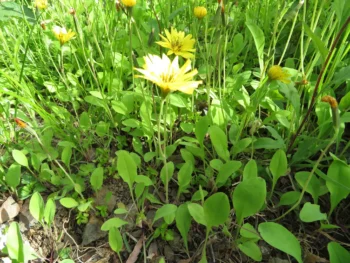
Creeping Lettuce: A Ground-Hugging Perennial That’s More Than Meets the Eye
If you’ve stumbled across a low-growing plant with cheerful yellow flowers that looks suspiciously like a miniature dandelion sprawling across the ground, you might have encountered creeping lettuce (Ixeris stolonifera). This perennial forb has been quietly making itself at home in parts of the northeastern United States, and gardeners are starting to take notice.
What Exactly Is Creeping Lettuce?
Creeping lettuce is a non-native perennial that belongs to the sunflower family. As its name suggests, this plant has a creeping growth habit, spreading via underground stems called stolons to form low mats of foliage. Don’t let the lettuce part fool you – while it’s related to garden lettuce, this isn’t something you’d want to toss in your salad!
You might also see this plant listed under its botanical synonym, Lactuca stolonifera, in older gardening references. But regardless of what you call it, this little ground-hugger has some interesting characteristics worth exploring.
Where You’ll Find It Growing Wild
Originally native to East Asia, creeping lettuce has established itself in several northeastern states, including Delaware, New Jersey, New York, and Pennsylvania. It reproduces on its own in the wild and seems quite content to stick around without any human intervention.
- Species observed
- No observations
The Good, The Bad, and The Practical
So, should you welcome creeping lettuce into your garden? Here’s what you need to know:
The appealing aspects: Creeping lettuce produces small, bright yellow flowers that attract pollinators like bees and small butterflies. Its low-growing, mat-forming habit makes it useful as a ground cover in informal garden settings. Plus, it’s remarkably low-maintenance once established and can handle a variety of growing conditions.
The considerations: As a non-native species, creeping lettuce doesn’t provide the same ecological benefits as native plants. While it’s not currently listed as invasive, its spreading nature means it could potentially compete with native ground covers. It’s one of those plants that sits in the neutral category – not necessarily harmful, but not particularly beneficial to local ecosystems either.
Growing Conditions and Care
If you decide to give creeping lettuce a try, you’ll find it refreshingly undemanding. Here’s what it prefers:
- Light: Partial shade to full sun
- Soil: Adaptable to various soil types, including poor soils
- Hardiness: Thrives in USDA zones 5-8
- Water: Moderate moisture, but quite drought-tolerant once established
Planting and Maintenance Tips
Creeping lettuce is about as low-maintenance as perennials get. Once you plant it, it pretty much takes care of itself. However, keep an eye on its spreading habit – those stolons can help it cover ground quickly, which might be exactly what you want, or it might require some management to keep it in bounds.
The plant typically reaches about 6-12 inches in height and can spread indefinitely via its creeping stems. Regular division every few years can help control its spread and rejuvenate older plantings.
Consider Native Alternatives
While creeping lettuce can serve a purpose in the right garden setting, consider native alternatives that provide similar ground cover benefits while supporting local wildlife:
- Wild ginger (Asarum canadense): Excellent native ground cover for shade
- Wild strawberry (Fragaria virginiana): Native ground cover with white flowers and edible berries
- Wintergreen (Gaultheria procumbens): Evergreen native with attractive berries
The Bottom Line
Creeping lettuce is one of those plants that falls into the perfectly fine but not spectacular category. It’s hardy, adaptable, and provides some pollinator benefits, but it won’t win any awards for supporting native ecosystems. If you’re looking for a low-maintenance ground cover and don’t mind its non-native status, it could work well in informal garden settings or naturalized areas.
However, if you’re passionate about supporting local wildlife and native plant communities, you might want to explore native alternatives instead. Either way, understanding what you’re growing – and why – helps you make informed decisions that align with your gardening goals and values.