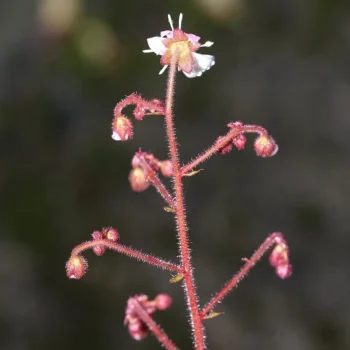
Creeping Saxifrage: A Charming Ground Cover with a Spreading Personality
If you’re looking for a unique ground cover that practically plants itself, creeping saxifrage might just catch your eye. This perennial forb has earned quite a reputation among gardeners – some love its easy-going nature and attractive foliage, while others find its enthusiastic spreading habits a bit too much to handle.
What Exactly is Creeping Saxifrage?
Creeping saxifrage (Saxifraga stolonifera) goes by the synonym Saxifraga sarmentosa and hails originally from Eastern Asia. This non-native perennial has made itself at home in the wild across California, Oregon, and Washington, where it reproduces without any help from humans and tends to stick around once established.
As a forb, this plant lacks significant woody tissue and keeps its growing points at or below ground level. What makes it particularly interesting is its method of getting around – it sends out colorful red runners called stolons that create new plants wherever they touch the ground. Think of it as nature’s way of social networking!
- Species observed
- No observations
The Appeal: Why Gardeners Fall for This Plant
There’s definitely something charming about creeping saxifrage’s appearance. The rounded leaves feature attractive silver veining that creates beautiful patterns, almost like nature’s own decorative artwork. Come flowering time, delicate white blooms appear on tall, airy stalks that dance above the foliage.
The plant typically grows as a low-spreading ground cover, making it perfect for:
- Rock gardens where it can cascade over stones
- Shaded areas under trees
- Container gardens and hanging baskets
- Woodland garden settings
Growing Conditions: What Makes It Happy
Creeping saxifrage is surprisingly easy to please, thriving in USDA hardiness zones 6-9. Here’s what it prefers:
- Light: Partial to full shade – this isn’t a sun worshipper
- Soil: Moist, well-draining soil works best
- Temperature: Cool conditions are ideal
- Moisture: Consistent moisture without waterlogged conditions
Planting and Care: The Easy Road
One of the biggest draws of creeping saxifrage is how low-maintenance it can be. The plant practically takes care of its own propagation through those spreading stolons. Simply plant it in a suitable spot, keep the soil moderately moist, and watch it establish itself.
However, here’s where that easy-going nature becomes a double-edged sword – this plant’s enthusiasm for spreading means you might find it popping up in places you didn’t intend. Regular monitoring and removal of unwanted runners will keep it in bounds.
The Pollinator Question
While creeping saxifrage does produce small white flowers that may attract some pollinators, it’s not considered a major pollinator magnet. If supporting native wildlife is a priority for your garden, you might want to consider native alternatives.
Should You Plant It? The Balanced View
Creeping saxifrage isn’t invasive or noxious, so there’s no environmental red flag waving. However, as a non-native species, it doesn’t provide the same ecological benefits as plants that evolved alongside local wildlife.
Consider it if you:
- Need a reliable shade ground cover
- Want something low-maintenance for containers
- Appreciate unique foliage patterns
- Don’t mind managing its spreading tendencies
Native Alternatives Worth Considering
If you’re leaning toward supporting native ecosystems, consider these alternatives that offer similar ground cover benefits:
- Wild ginger (Asarum canadense) for deep shade areas
- Coral bells (Heuchera species) for attractive foliage
- Native sedges for moisture-retentive areas
The Bottom Line
Creeping saxifrage is like that friendly neighbor who’s always offering to help but sometimes shows up uninvited. It’s genuinely useful and attractive, but comes with its own personality quirks. Whether it’s right for your garden depends on your tolerance for enthusiastic spreaders and your priorities regarding native plant choices. Just remember – once you invite this one to the party, it tends to make itself very much at home!