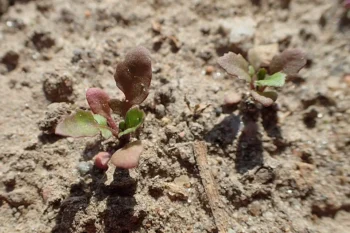
Creeping Yellowcress: A Wetland Wanderer You Probably Don’t Want in Your Garden
If you’ve ever spotted small yellow flowers carpeting wet areas along roadsides or near ponds, you might have encountered creeping yellowcress (Rorippa sylvestris). This unassuming perennial forb has quite the story—and quite the reputation for making itself at home just about everywhere.
What Exactly Is Creeping Yellowcress?
Creeping yellowcress is a low-growing perennial that belongs to the mustard family. True to its name, this plant has a creeping, rhizomatous growth habit that allows it to spread horizontally and form colonies. It typically reaches about 0.7 feet tall, producing clusters of small yellow flowers during spring and summer.
You might also see this plant listed under its scientific synonym Radicula sylvestris, but Rorippa sylvestris is the current accepted name.
Where Does It Come From and Where Is It Now?
Here’s where things get interesting: creeping yellowcress isn’t actually native to North America. Originally from Europe and western Asia, this plant has become a well-established non-native species across much of the continent. It now grows throughout Alaska, Canada (including provinces from British Columbia to Newfoundland), and virtually every U.S. state from coast to coast.
- Species observed
- No observations
The Wetland Connection
One of the most notable characteristics of creeping yellowcress is its strong affinity for wet places. Depending on the region, it ranges from facultative (can grow in wet or dry areas) to obligate wetland status (almost always found in wetlands). This means you’re most likely to encounter it in:
- Pond edges and lakeshores
- Wet meadows
- Ditches and drainage areas
- Stream banks
- Other consistently moist locations
Should You Plant Creeping Yellowcress?
Here’s the honest truth: most gardeners probably shouldn’t actively plant creeping yellowcress. While it’s not officially listed as invasive, this plant has some characteristics that make it less than ideal for most garden settings:
- Aggressive spreader: Its rhizomatous growth habit means it can quickly colonize an area
- Limited ornamental value: The small yellow flowers aren’t particularly showy
- Weedy appearance: It tends to look more wild than cultivated
- Non-native status: It doesn’t provide the same ecosystem benefits as native plants
Better Native Alternatives
If you’re looking for native plants that thrive in wet conditions and offer similar growing characteristics, consider these alternatives instead:
- Native sedges for wetland areas
- Wild bergamot for pollinator-friendly options
- Native watercress species
- Regional native wetland wildflowers
If You’re Determined to Grow It
Should you decide to grow creeping yellowcress despite the caveats, here’s what you need to know:
Growing Conditions
- Soil: Prefers coarse to medium-textured soils with high moisture
- Water: High moisture requirements—this plant loves wet feet
- Light: Intermediate shade tolerance, but can handle full sun
- pH: Adaptable to pH ranges from 5.0 to 8.0
- Temperature: Hardy to -28°F, suitable for zones 3-9
Planting and Care
Creeping yellowcress is remarkably easy to establish—perhaps too easy! It propagates readily by seed and spreads vegetatively through its rhizome system. Seeds can be sown in spring, and the plant will quickly establish itself in suitable conditions.
The main care you’ll need to provide is actually management to prevent unwanted spread. Once established, this plant can be difficult to control, so plant it only where you’re comfortable with it naturalizing.
Wildlife and Pollinator Value
While creeping yellowcress does produce flowers that may attract some small insects, it’s not considered a significant pollinator plant. Its primary value to wildlife is as ground cover in wetland areas, though native alternatives would provide better ecosystem services.
The Bottom Line
Creeping yellowcress is one of those plants that’s more interesting to learn about than to actually grow. While it’s successfully adapted to life across North America and can be useful for erosion control in wet areas, most gardeners will be happier choosing native alternatives that offer better ornamental value and ecological benefits.
If you’re dealing with challenging wet areas in your landscape, consider consulting with local native plant experts who can recommend appropriate native species for your specific region and conditions. Your local ecosystem—and your future self—will thank you!