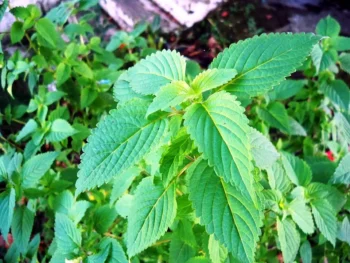
Crested Latesummer Mint: A Beautiful But Problematic Garden Visitor
If you’ve spotted a tall, aromatic plant with spiky purple flowers blooming in late summer, you might have encountered crested latesummer mint (Elsholtzia ciliata). While this annual herb certainly has its charms, there’s more to this story than meets the eye – and it’s not all good news for North American gardeners.
What is Crested Latesummer Mint?
Crested latesummer mint, also known by its scientific name Elsholtzia ciliata (and sometimes listed as Elsholtzia cristata), is an annual forb that belongs to the mint family. True to its name, this herbaceous plant produces its most impressive display in late summer, just when many other flowers are starting to fade.
This upright grower typically reaches 1-4 feet in height with a spread of 1-2 feet. Its aromatic leaves release a pleasant fragrance when crushed, and the plant produces dense, terminal spikes of small purple-pink flowers that create an eye-catching display.
Where Does It Come From?
Here’s where things get complicated. Despite its appealing appearance, crested latesummer mint isn’t native to North America. This Asian native originally hails from China, Japan, Korea, Mongolia, and Russia, but it has made itself quite at home across many parts of Canada and the United States.
Currently, you can find established populations in Manitoba, New Brunswick, Ontario, Quebec, Connecticut, Maine, Massachusetts, Minnesota, New Jersey, New York, North Carolina, North Dakota, Ohio, Pennsylvania, Vermont, West Virginia, and Wisconsin. The plant reproduces spontaneously in the wild and tends to persist without any human assistance.
- Species observed
- No observations
The Invasive Issue
Before you start planning a spot for this pretty plant in your garden, here’s the crucial information every gardener needs to know: crested latesummer mint is considered potentially invasive and is actually prohibited in Connecticut. This means it has the potential to spread aggressively and crowd out native plants that our local wildlife depends on.
The plant’s ability to self-seed readily and establish in disturbed areas makes it particularly problematic. Once it takes hold, it can quickly spread beyond garden boundaries into natural areas, where it competes with native species for resources.
Why You Should Skip This One
While crested latesummer mint does attract pollinators like bees and butterflies with its late-season blooms, the environmental risks outweigh the benefits. Here’s why responsible gardeners should avoid planting it:
- It’s classified as potentially invasive and prohibited in some areas
- It can escape cultivation and establish in wild areas
- It competes with native plants that provide better habitat for local wildlife
- Once established, it can be difficult to control due to prolific self-seeding
Better Native Alternatives
Instead of taking a chance with crested latesummer mint, consider these fantastic native alternatives that provide similar late-season color and pollinator benefits:
- Wild bergamot (Monarda fistulosa): Another mint family member with aromatic foliage and showy purple flowers
- New England aster (Symphyotrichum novae-angliae): Provides spectacular purple blooms in late summer and fall
- Ironweed (Vernonia species): Tall plants with purple flower clusters that bloom in late summer
- Joe Pye weed (Eutrochium species): Native plants with pink-purple flower clusters beloved by butterflies
If You Already Have It
Found crested latesummer mint growing on your property? The best course of action is removal, especially before it sets seed. Since it’s an annual, preventing seed production is key to controlling its spread. Remove plants by hand-pulling or cutting before the flowers go to seed, typically in late summer to early fall.
The Bottom Line
While crested latesummer mint might look appealing with its late-season purple spikes and pollinator-friendly flowers, its invasive potential makes it a plant to avoid. By choosing native alternatives instead, you’ll create a more sustainable garden that truly supports local ecosystems while still enjoying beautiful late-summer blooms. Remember, the most beautiful garden is one that works in harmony with the natural world around it!