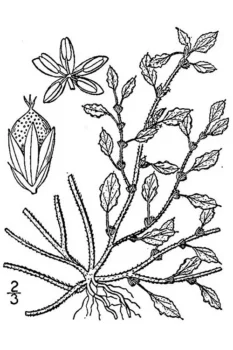
Crispleaf Amaranth: A Lesser-Known Annual Worth Knowing
Meet crispleaf amaranth (Amaranthus crispus), a quirky little annual that might not win any beauty contests but certainly has its own understated charm. This herbaceous forb brings a unique texture to gardens with its distinctive crisp-edged leaves, though you’ll need to look closely to appreciate its subtle appeal.
What Exactly Is Crispleaf Amaranth?
Crispleaf amaranth is an annual forb, meaning it’s a non-woody herbaceous plant that completes its entire life cycle in one growing season. As part of the amaranth family, it shares DNA with some pretty impressive cousins, but this particular species keeps things low-key. The plant gets its common name from its leaves, which have distinctively crimped or wavy edges that give them a crisp appearance.
Native Status and Where You’ll Find It
Here’s the thing about crispleaf amaranth – it’s not a North American native. This introduced species has made itself at home in parts of the eastern United States, establishing populations that reproduce naturally without human intervention. Currently, you can find it growing wild in New Jersey, New York, North Carolina, and Virginia.
- Species observed
- No observations
Should You Plant Crispleaf Amaranth?
The honest answer? Probably not as your first choice. While crispleaf amaranth isn’t invasive or harmful, it’s also not particularly showy or beneficial to local wildlife. Its small, inconspicuous flowers are wind-pollinated, so they won’t attract the bees and butterflies you’re probably hoping to see in your garden.
However, if you’re a plant collector, botanical enthusiast, or someone who appreciates unusual foliage textures, crispleaf amaranth might have a place in your wild garden or naturalized area.
Better Native Alternatives
Instead of crispleaf amaranth, consider these native options that offer similar growing ease with much better ecological benefits:
- Native amaranth species like red amaranth (Amaranthus cruentus) where appropriate
- Wild spinach (Chenopodium album) for similar leafy texture
- Native annual wildflowers suited to your specific region
Growing Crispleaf Amaranth (If You Choose To)
Should you decide to grow crispleaf amaranth, you’ll find it refreshingly undemanding. This adaptable annual thrives in full sun and tolerates poor soils that would make other plants throw in the trowel.
Growing Conditions
- Sunlight: Full sun preferred
- Soil: Adaptable to various soil types, including poor soils
- Water: Drought tolerant once established
- Maintenance: Minimal care required
Planting and Care Tips
Crispleaf amaranth is a self-seeding annual, which means once you have it, you’ll likely have it for years to come (whether you want it or not!). Plant seeds directly in the garden after the last frost date. The seeds are tiny, so scatter them lightly over prepared soil and barely cover them.
Once established, these plants pretty much take care of themselves. They’re drought tolerant and don’t require fertilization. In fact, too much feeding might make them more leafy at the expense of seed production.
The Bottom Line
Crispleaf amaranth is one of those plants that’s interesting from a botanical perspective but doesn’t offer much for the average gardener. While it’s not problematic to grow, your garden real estate is probably better used for native species that support local wildlife and provide greater visual impact. If you’re curious about this crisp-leaved character, consider it for wild areas where its subtle charms can be appreciated without taking up prime garden space.