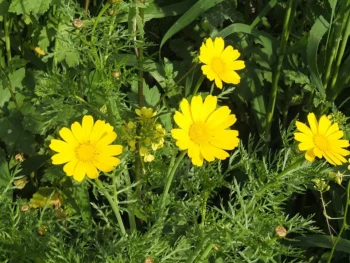
Crowndaisy: A Cheerful Mediterranean Annual for Your Garden
Looking for a bright, easy-going annual that’ll keep your garden buzzing with color from spring through fall? Meet crowndaisy (Glebionis coronarium), a delightful Mediterranean native that’s been charming gardeners across North America with its sunny disposition and feathery foliage. While this cheerful daisy isn’t native to our continent, it’s become a beloved addition to many gardens thanks to its reliable blooms and carefree nature.
What Exactly is Crowndaisy?
Crowndaisy is an annual forb – basically a soft-stemmed herbaceous plant that completes its entire life cycle in one growing season. You might also see it listed under its former scientific names, including Chrysanthemum coronarium, but don’t let the name changes fool you – it’s the same delightful plant that produces those classic daisy-like flowers we all love.
This Mediterranean native has found a comfortable home across several U.S. states and Canadian provinces, including Alabama, Arizona, California, Colorado, Florida, Maine, Massachusetts, Vermont, New Brunswick, and Ontario. While it’s considered naturalized in many areas, it’s classified as a waif in Canada, meaning it shows up occasionally but doesn’t stick around permanently without human help.
- Species observed
- No observations
Why Gardeners Love (or Don’t Love) Crowndaisy
Crowndaisy brings several appealing qualities to the garden table:
- Bright yellow, daisy-like flowers that bloom continuously from spring through fall
- Attractive, deeply-lobed foliage that adds texture even when not in bloom
- Excellent pollinator magnet, drawing bees, butterflies, and beneficial insects
- Outstanding as a cut flower with good vase life
- Drought-tolerant once established
- Self-seeds readily, potentially returning year after year
However, there are a few considerations to keep in mind. Since crowndaisy isn’t native to North America, some gardeners prefer to focus on indigenous plants that provide better support for local wildlife ecosystems. Additionally, its enthusiastic self-seeding habit might be too much of a good thing in smaller spaces.
Perfect Garden Spots for Crowndaisy
This adaptable annual shines in several garden settings:
- Cottage gardens where its informal charm fits right in
- Wildflower meadows and naturalized areas
- Cutting gardens for fresh bouquets
- Pollinator gardens alongside other bee-friendly plants
- Mediterranean-style landscapes
Growing Crowndaisy Successfully
The good news? Crowndaisy is remarkably easy to please. Here’s how to keep it happy:
Light and Soil: Plant in full sun and well-draining soil. This drought-tolerant beauty actually prefers slightly poor to average soil over rich, fertile ground.
Planting: Direct seed in early spring after the last frost, or start indoors 4-6 weeks before the last expected frost. Seeds are small, so barely cover them with soil – they need light to germinate.
Watering: Water regularly until established, then back off. Once mature, crowndaisy handles dry conditions beautifully.
Care: Deadhead spent blooms to encourage continued flowering, though leaving some flowers to go to seed ensures volunteers next year.
Hardiness: As an annual, crowndaisy can be grown in USDA zones 2-11, making it accessible to gardeners in most climates.
Supporting Native Wildlife
While crowndaisy does provide nectar for pollinators and some wildlife benefits, consider pairing it with or substituting native alternatives that offer even better support for local ecosystems. Native asters, black-eyed Susans (Rudbeckia species), or regional wildflowers can provide similar aesthetic appeal while supporting indigenous wildlife more effectively.
The Bottom Line on Crowndaisy
Crowndaisy offers reliable color, easy care, and pollinator appeal for gardeners seeking a low-maintenance annual. While it’s not native to North America, it’s not considered invasive either, making it a reasonable choice for gardeners who appreciate its Mediterranean charm. Whether you’re filling gaps in a cottage garden, creating a cutting garden, or simply want something cheerful and unfussy, crowndaisy delivers sunny blooms with minimal effort required.
Just remember – a little goes a long way with this enthusiastic self-seeder, so plant accordingly and consider incorporating native alternatives to create the most beneficial garden for local wildlife.