Crownvetch: Why This Pretty Purple Flower Should Stay Out of Your Garden
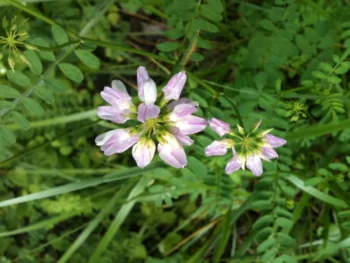
If you’ve ever driven along highways in much of North America, you’ve likely spotted the cheerful pink and purple blooms of crownvetch (Securigera varia, formerly known as Coronilla varia) carpeting roadside slopes. While this low-growing perennial might look like an attractive groundcover option for your landscape, there’s a compelling reason to resist its charms: crownvetch is an aggressive non-native species that can quickly take over natural areas.
What is Crownvetch?
Crownvetch, also called purple crownvetch, is a perennial forb—basically a non-woody flowering plant—that spreads through underground rhizomes to form dense mats. This European native was intentionally introduced to North America decades ago for erosion control, but like many well-intentioned introductions, it quickly escaped cultivation and began colonizing wild spaces.
The plant produces clusters of small, pea-like flowers in shades of pink and purple during late spring and summer. Its compound leaves are medium-textured and green, giving it a relatively attractive appearance. However, don’t let its pretty face fool you—this plant has some serious behavioral problems.
Where You’ll Find It (Whether You Want To or Not)
Crownvetch has established itself across an impressively vast range, growing in nearly every U.S. state and several Canadian provinces, from Alabama to Alaska and everywhere in between. It thrives in a wide variety of conditions, from roadsides to meadows to forest edges.
- Species observed
- No observations
The Invasion Problem
Here’s where things get serious: crownvetch is classified as invasive in Missouri and restricted in Wisconsin, with similar concerns in many other regions. This plant doesn’t just politely stay where you plant it—it spreads rapidly through both underground rhizomes and seeds, forming dense colonies that crowd out native plants.
The problem is particularly acute because crownvetch fixes nitrogen in the soil, which might sound beneficial but actually changes soil chemistry in ways that favor non-native species over natives. It’s like the plant equivalent of that house guest who rearranges your furniture to suit their own preferences.
Growing Characteristics (For Identification Purposes Only)
Understanding how crownvetch grows can help you identify and remove it if it appears in your landscape:
- Height and spread: Grows up to 3 feet tall but typically stays lower, spreading indefinitely through rhizomes
- Growth rate: Moderate initial growth but rapid vegetative spread once established
- Hardiness: Extremely hardy, surviving in USDA zones 3-9
- Soil preferences: Adaptable to coarse and medium-textured soils, pH 4.8-7.8
- Drought tolerance: High drought tolerance once established
- Propagation: Spreads by seed and aggressive rhizome growth
Why You Should Avoid Planting Crownvetch
Simply put: don’t plant this species. While crownvetch does provide some benefits to pollinators with its abundant flowers, these benefits are far outweighed by its negative ecological impacts. The plant’s aggressive spreading habit and ability to alter soil chemistry make it a poor choice for responsible gardeners who care about supporting native ecosystems.
Better Alternatives for Your Garden
If you’re attracted to crownvetch for groundcover or erosion control, consider these native alternatives instead:
- Wild bergamot (Monarda fistulosa): Purple flowers beloved by pollinators
- Wild ginger (Asarum canadense): Excellent groundcover for shaded areas
- Creeping phlox (Phlox subulata): Colorful spring blooms and good erosion control
- Local native sedges: Excellent for slope stabilization with deep root systems
If You Already Have Crownvetch
Found crownvetch in your landscape? The best approach is removal, though this can be challenging due to its extensive rhizome system. Repeated mowing before seed set can weaken plants over time, and targeted herbicide application may be necessary for large infestations. Always check with your local extension office for the most effective and environmentally responsible removal methods for your area.
Remember, every non-native plant we choose not to grow creates space for native species that support local wildlife and maintain ecological balance. In the case of crownvetch, saying no thanks to those pretty purple blooms is definitely the right call for both your garden and your local ecosystem.