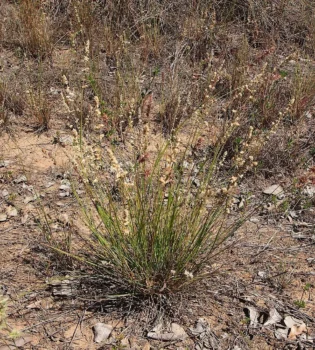
Cuming’s Lovegrass: A Non-Native Grass with Garden Potential
If you’re looking for a fine-textured grass that can handle a variety of growing conditions, you might have come across Cuming’s lovegrass (Eragrostis cumingii). This adaptable grass has quietly made itself at home in several U.S. states, but is it right for your garden? Let’s dive into what makes this grass tick and whether it deserves a spot in your landscape.
What is Cuming’s Lovegrass?
Cuming’s lovegrass is a graminoid – essentially a grass or grass-like plant that belongs to the broader family of grasses, sedges, and rushes. You might also see it referred to by its synonyms Eragrostis brownei or Eragrostis simplex in older gardening references. This species has an interesting dual nature, functioning as both an annual and perennial depending on growing conditions.
Where Does It Grow?
Originally hailing from tropical regions of Asia and Australia, Cuming’s lovegrass has established itself across several U.S. states including Alabama, Florida, Georgia, Hawaii, New Jersey, and North Carolina. It’s considered a non-native species that reproduces readily in the wild and has become naturalized in these areas.
- Species observed
- No observations
The Garden Appeal (Or Lack Thereof)
Let’s be honest – Cuming’s lovegrass isn’t going to win any beauty contests. This is a subtle, fine-textured grass that offers delicate foliage and airy seed heads rather than showy blooms. Its appeal lies in its understated nature and adaptability rather than dramatic visual impact.
Here’s what it brings to the table:
- Fine, delicate texture that can soften harsh landscape edges
- Adaptable growth habit that works in various conditions
- Low-maintenance once established
- Can function as groundcover in naturalized areas
Growing Conditions and Care
One of Cuming’s lovegrass’s strongest suits is its adaptability. This grass is quite the survivor, capable of thriving in both wetland and upland conditions. In the Atlantic and Gulf Coastal Plain regions, as well as the Eastern Mountains and Piedmont, it’s classified as facultative upland, meaning it usually prefers drier sites but can handle some moisture. In Hawaii, it’s even more flexible, equally happy in wet or dry conditions.
For successful cultivation:
- Plant in USDA hardiness zones 8-11
- Provide well-draining soil (though it tolerates various soil types)
- Choose locations with full sun to partial shade
- Water regularly during establishment, then reduce as the plant matures
- Expect self-seeding – this grass readily reproduces on its own
Wildlife and Ecological Considerations
As a grass, Cuming’s lovegrass provides limited direct benefits to pollinators compared to flowering plants. However, it can offer habitat structure and may produce seeds that some birds find appealing. Since specific wildlife benefits aren’t well-documented, don’t count on it as a major wildlife magnet.
Should You Plant It?
Here’s where things get nuanced. While Cuming’s lovegrass isn’t invasive or noxious, it is a non-native species that’s already well-established in several states. If you’re passionate about supporting native ecosystems, you might want to consider native alternatives instead.
Consider Cuming’s lovegrass if you:
- Need a low-maintenance grass for naturalized areas
- Want fine texture in challenging growing conditions
- Are creating a meadow-style garden where origin is less critical
Skip it if you:
- Prioritize native plants for ecological reasons
- Want showy, ornamental grasses
- Prefer plants with documented wildlife benefits
Native Alternatives to Consider
If you like the idea of a fine-textured, adaptable grass but want to stick with native species, consider researching native Eragrostis species in your region, or other native grasses like little bluestem or buffalo grass, depending on your location and growing conditions.
The Bottom Line
Cuming’s lovegrass is a perfectly serviceable grass that won’t cause problems in your garden, but it’s not going to be a showstopper either. It’s the horticultural equivalent of a reliable friend – not flashy, but dependable. Whether you choose to plant it depends on your gardening philosophy and what you’re hoping to achieve in your landscape. If you do decide to grow it, you’ll find it refreshingly low-maintenance once established.