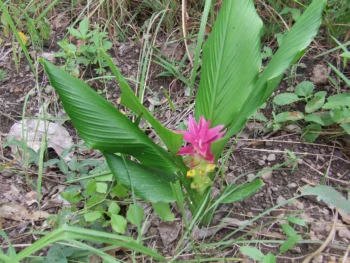
Curcuma australasica: A Mysterious Pacific Ginger
If you’ve stumbled across the name Curcuma australasica in your plant research, you’re probably wondering what exactly this species is and whether it belongs in your garden. Well, you’re not alone in your curiosity! This member of the ginger family is one of those plants that keeps botanists and gardeners guessing.
What We Know About This Elusive Plant
Curcuma australasica is a perennial herbaceous plant, technically classified as a forb. This means it’s a non-woody plant that lacks significant secondary growth above ground—think more like your garden herbs than a shrub or tree. Like other members of the Curcuma genus (which includes turmeric), it likely grows from underground rhizomes and produces distinctive flowers.
Where You’ll Find It Growing
This species has been documented in Guam and Palau, where it’s considered a non-native plant that reproduces spontaneously in the wild. While it’s established itself in these Pacific locations, it didn’t originally call these islands home.
- Species observed
- No observations
The Mystery Factor
Here’s where things get interesting (and a bit frustrating for us plant lovers): there’s surprisingly little detailed information available about Curcuma australasica specifically. Unlike its famous cousin turmeric or other well-documented Curcuma species, this one seems to fly under the radar in most gardening and botanical resources.
Garden Considerations
If you’re thinking about growing this plant, here’s what we can piece together:
- It has a facultative wetland status in Hawaii, meaning it can handle both wet and dry conditions
- As a perennial forb, it likely dies back seasonally and returns from its underground parts
- Being part of the ginger family, it probably prefers warm, humid conditions
Should You Plant It?
Given the limited information available and its non-native status, you might want to consider well-documented native alternatives instead. If you’re gardening in a Pacific region, look into native gingers or other herbaceous perennials that are better understood and support local ecosystems.
However, if you do encounter this plant or have access to it, it doesn’t appear to be listed as invasive or noxious—though the lack of data means we should proceed with caution.
The Bottom Line
Curcuma australasica remains something of an enigma in the plant world. While it’s clearly established itself in parts of the Pacific, the lack of detailed growing information makes it a risky choice for most gardeners. Sometimes the most responsible approach is to admire these mysterious species from afar while choosing better-understood plants for our gardens.
If you’re drawn to the Curcuma genus, consider exploring other species with more available information and established care guidelines. Your garden (and future self) will thank you for choosing plants you can actually learn to grow successfully!