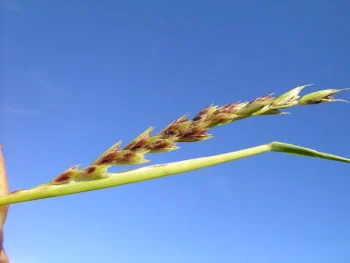
Curly Mitchell Grass: An Australian Native for Drought-Tolerant Gardens
If you’re searching for a unique grass that can handle serious drought conditions, curly Mitchell grass (Astrebla lappacea) might catch your eye. This distinctive Australian native gets its name from its characteristic twisted, curly leaves that create an interesting textural element in the landscape.
What Makes Curly Mitchell Grass Special?
Curly Mitchell grass is a perennial tufted grass that forms neat clumps with its signature curly foliage. The twisted leaves create a almost sculptural quality that sets it apart from typical lawn grasses. This hardy grass was historically important as fodder for livestock in Australia’s arid regions, earning its place as one of the country’s valuable native grasses.
You might also see this plant listed under its former scientific name, Danthonia lappacea, in older gardening references.
Where Does It Come From?
Curly Mitchell grass is native to Australia’s arid and semi-arid regions, where it has evolved to thrive in challenging conditions with minimal rainfall and intense heat. It’s particularly common in Queensland and New South Wales, where it grows naturally in open woodlands and grasslands.
Should You Plant It in Your Garden?
While curly Mitchell grass can be an interesting addition to specialized drought-tolerant gardens, there are a few things to consider:
- Climate requirements: This grass needs warm climates (USDA zones 9-11) and won’t survive freezing temperatures
- Limited availability: As an Australian native, it may be difficult to source in North America
- Specialized use: Best suited for xerophytic or Australian-themed gardens rather than general landscaping
If you’re not in a warm climate zone or prefer supporting local ecosystems, consider native alternatives like buffalo grass, blue grama, or other drought-tolerant native grasses suited to your region.
Growing Curly Mitchell Grass Successfully
If you’ve decided this unique grass fits your garden vision, here’s how to grow it successfully:
Ideal Growing Conditions
- Sunlight: Full sun exposure is essential
- Soil: Well-draining soils; avoid areas that stay wet
- Water: Drought tolerant once established, but needs regular water during establishment
- Climate: Warm climates only (zones 9-11)
Planting and Care Tips
Plant curly Mitchell grass in spring when soil temperatures are warming up. Choose a sunny location with good drainage – this grass absolutely cannot tolerate soggy conditions.
During the first growing season, provide regular water to help establish the root system. Once established, this grass is remarkably drought tolerant and requires minimal supplemental watering.
The grass grows slowly to moderately, forming neat clumps that typically reach 1-2 feet in height and spread about the same width.
Landscape Role and Design Ideas
Curly Mitchell grass works well as:
- An accent plant in drought-tolerant gardens
- Part of a native Australian plant collection
- A textural element in rock gardens
- Ground cover in areas too dry for other plants
Wildlife and Ecological Benefits
As a wind-pollinated grass, curly Mitchell grass doesn’t provide significant nectar resources for pollinators. However, it can provide shelter and nesting material for small wildlife in appropriate climates.
The Bottom Line
Curly Mitchell grass is a specialized choice for gardeners in warm climates who want something truly unique for their drought-tolerant landscapes. While it’s not invasive, it’s also not native to North America, so consider whether native alternatives might better support your local ecosystem. If you do choose to grow it, you’ll have a conversation-starting grass that’s virtually indestructible once established!