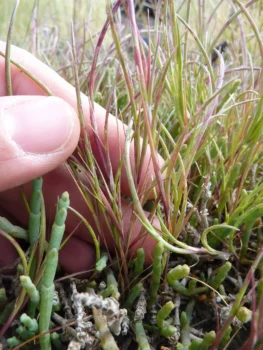
Curved Sicklegrass: An Uninvited Guest in American Gardens
Meet Parapholis incurva, better known as curved sicklegrass – a little annual grass that’s made quite the journey from its Mediterranean homeland to establish itself across much of the United States. While you probably won’t find this one at your local nursery, you might just stumble across it in your yard, especially if you live near the coast or in disturbed areas.
What Exactly Is Curved Sicklegrass?
Curved sicklegrass is a small, unassuming annual grass that gets its common name from its distinctive curved, sickle-shaped flower spikes. Botanically known as Parapholis incurva, this little plant also goes by the scientific synonyms Aegilops incurva and Pholiurus incurvus, depending on which botanical reference you’re consulting.
As an annual grass, curved sicklegrass completes its entire life cycle in one growing season – sprouting, growing, flowering, setting seed, and dying all within a year. It’s what botanists call a graminoid, which is a fancy way of saying it’s part of the grass and grass-like plant family.
Where You’ll Find It
Originally from the Mediterranean region, curved sicklegrass has naturalized across a surprising number of American states. You can find established populations in Alabama, California, Delaware, Louisiana, Maryland, Michigan, Mississippi, New Jersey, North Carolina, Oregon, Pennsylvania, Texas, and Virginia. It’s particularly fond of coastal areas and disturbed soils.
- Species observed
- No observations
This adaptable little grass has a Facultative Upland wetland status across all regions, meaning it usually prefers drier ground but won’t turn its nose up at occasionally wet conditions.
Should You Plant Curved Sicklegrass?
Here’s the short answer: probably not. While curved sicklegrass isn’t classified as invasive or noxious, it’s not exactly what you’d call garden-worthy either. This non-native species tends to pop up on its own in disturbed areas, and it doesn’t offer much in the way of aesthetic appeal or ecological benefits.
Since it’s wind-pollinated, curved sicklegrass doesn’t provide nectar or pollen resources for bees, butterflies, or other beneficial insects. Its small stature and unremarkable appearance won’t add much visual interest to your landscape either.
Better Native Alternatives
If you’re looking to add native grasses to your landscape, consider these beautiful alternatives that will actually support local wildlife:
- Little bluestem (Schizachyrium scoparium) – gorgeous fall color and bird-friendly seeds
- Buffalo grass (Poaceae family natives) – excellent for natural lawns in appropriate regions
- Native sedges (Carex species) – diverse options for various growing conditions
- Switchgrass (Panicum virgatum) – dramatic height and movement in the landscape
If It Shows Up Anyway
Since curved sicklegrass is an annual that readily self-seeds, you might find it appearing in your garden whether you invited it or not. If you discover it growing in areas where you’d prefer something else, simple hand-pulling before it sets seed is usually effective for small populations.
The plant prefers disturbed soils and can tolerate saline conditions, so improving soil health and establishing desired vegetation will naturally discourage its establishment over time.
The Bottom Line
While curved sicklegrass isn’t going to take over your garden or cause ecological havoc, it’s not a plant that most gardeners would choose to cultivate intentionally. Its Mediterranean origins mean it’s not supporting native wildlife, and its modest appearance doesn’t bring much to the table aesthetically.
If you’re passionate about supporting native ecosystems and creating beautiful, functional landscapes, your gardening efforts are better invested in native grass species that will provide food and habitat for local wildlife while giving you more bang for your buck in terms of visual impact.
Sometimes the most interesting plants are the ones we learn to identify and understand rather than the ones we choose to grow – and curved sicklegrass definitely falls into that category!