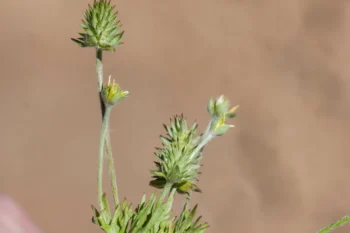
Curveseed Butterwort: The Tiny Wildflower You Probably Don’t Want to Plant
Ever stumbled across a small, unassuming plant with tiny yellow flowers and wondered what it was? You might have encountered curveseed butterwort (Ceratocephala testiculata), a diminutive annual that’s made itself at home across much of North America. While this little plant has an interesting story to tell, it’s probably not one you’ll want to invite into your garden on purpose.
What is Curveseed Butterwort?
Curveseed butterwort is a small annual forb – basically a non-woody herbaceous plant that completes its entire life cycle in one growing season. Don’t let the butterwort name fool you; this isn’t related to the carnivorous butterworts you might know. Instead, it belongs to the buttercup family and gets its common name from its distinctive curved, horn-like seed heads that appear after the tiny flowers fade.
This plant goes by several scientific names in older literature, including Ceratocephala orthoceras and Ranunculus testiculatus, which can make identifying it in field guides a bit tricky.
Where Did It Come From?
Here’s the thing about curveseed butterwort – it’s not native to North America. This little traveler originally hails from the Mediterranean region and parts of Asia, but it’s been quite the wanderer. Today, you can find it established across a remarkable range of locations, from British Columbia down to Arizona, and from coast to coast in many northern states including Montana, North Dakota, Minnesota, and even parts of New York.
- Species observed
- No observations
What Does It Look Like?
Curveseed butterwort is easy to miss if you’re not looking for it. The plants stay quite small and low to the ground, with finely divided, feathery leaves that form a small rosette. The flowers are tiny – we’re talking barely noticeable tiny – with pale yellow petals that appear in early spring. But the real identifying feature comes after flowering: those characteristic curved seed heads that look like tiny horns or beaks.
Should You Grow It?
Here’s where we need to have an honest conversation. While curveseed butterwort isn’t considered invasive or particularly harmful, it’s also not much of a garden plant. Here’s why most gardeners give it a pass:
- The flowers are so small they provide virtually no visual impact
- It offers minimal benefits to pollinators due to its tiny, brief blooms
- It tends to appear in disturbed areas like roadsides and agricultural fields rather than natural landscapes
- Once established, it readily self-seeds and can pop up where you don’t want it
Growing Conditions
If you’re curious about its growing preferences (perhaps you’re trying to get rid of it!), curveseed butterwort is quite adaptable. It thrives in disturbed soils and seems to particularly enjoy areas that have been recently tilled or otherwise disrupted. The plant is quite drought-tolerant once established and can handle a wide range of conditions across USDA hardiness zones 3-9, though as an annual, it’s more about timing than winter hardiness.
Better Native Alternatives
Instead of curveseed butterwort, consider these native alternatives that offer much more garden value:
- Wild bergamot – Provides excellent pollinator benefits and lovely purple flowers
- Prairie draba – Another small early bloomer, but native and more beneficial to local ecosystems
- Spring beauty – Delicate early spring flowers that actually make an impact in the garden
- Dutchman’s breeches – Unique flowers and native woodland appeal
The Bottom Line
Curveseed butterwort is one of those plants that’s more interesting from a botanical perspective than a gardening one. While it’s not causing major ecological problems, it’s also not adding much value to your landscape. If you encounter it in your garden, you can simply let it be or remove it – either way, you’re not missing out on much. For a truly rewarding garden experience, focus your energy on native plants that will support local wildlife and provide genuine beauty to your outdoor space.
Sometimes the best gardening advice is knowing what not to plant, and curveseed butterwort falls squarely into that category for most gardeners.