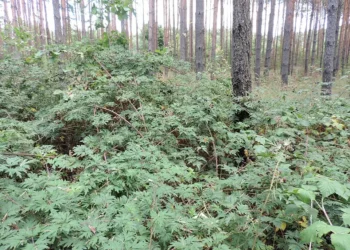
Cutleaf Blackberry: A Non-Native Berry with Ornamental Appeal
If you’ve ever spotted a blackberry plant with unusually lacy, deeply cut leaves, you’ve likely encountered cutleaf blackberry (Rubus laciniatus). This perennial subshrub offers a unique twist on the familiar blackberry, combining ornamental foliage with edible fruit. But before you rush to plant it, there are some important considerations every gardener should know.
What Makes Cutleaf Blackberry Special?
Cutleaf blackberry stands out from its relatives thanks to its distinctive deeply dissected leaves that give it an almost ferny appearance. This low-growing subshrub typically stays under 1.5 feet tall, though it can occasionally reach up to 3 feet at maturity. Despite its compact height, don’t let that fool you – this plant has a thicket-forming growth habit and can spread rapidly through underground runners.
In early summer, the plant produces conspicuous white flowers that eventually give way to black berries. The coarse-textured green foliage remains attractive throughout the growing season, and the plant maintains its leaves year-round in milder climates.
Where Does It Grow?
Originally native to Europe, cutleaf blackberry has established itself across much of North America. You’ll find it growing in numerous states and provinces, from British Columbia down to South Carolina, and from coast to coast including California, Colorado, New York, and many states in between. The plant has successfully naturalized in these areas, reproducing spontaneously without human intervention.
- Species observed
- No observations
Growing Conditions and Hardiness
Cutleaf blackberry is quite adaptable and hardy in USDA zones 5-9. Here’s what it prefers:
- Soil: Adapts well to fine and medium-textured soils with a pH between 5.2 and 7.7
- Moisture: Medium moisture requirements with low drought tolerance
- Light: Shade tolerant, making it useful for woodland edges and partially shaded areas
- Climate: Needs at least 150 frost-free days and 32-45 inches of annual precipitation
The plant shows obligate upland status in most regions, meaning it almost never occurs in wetlands, though it may occasionally appear in non-wetland areas that experience some moisture.
Garden Uses and Landscape Role
With its rapid growth rate and thicket-forming habit, cutleaf blackberry works well in:
- Naturalized or wild garden settings
- Erosion control on slopes
- Informal groundcover in large areas
- Wildlife gardens where berry production is desired
However, it’s not suitable for formal garden designs or small spaces due to its spreading nature and somewhat unruly growth habit.
Pollinator and Wildlife Benefits
The white flowers bloom in early summer, providing nectar for bees, butterflies, and other pollinators. The abundant black fruits that follow from summer through fall offer food for birds and small mammals, making this plant valuable for wildlife gardens.
Planting and Care Tips
If you decide to grow cutleaf blackberry, here’s what you need to know:
- Propagation: Can be grown from seed, bare root plants, containers, or sprigs
- Spacing: Plant 1,200 to 4,800 per acre depending on desired coverage
- Care: Minimal care required once established; benefits from occasional pruning to control spread
- Growth: Expect rapid establishment and vegetative spread
Seeds require cold stratification, and seedlings show medium vigor. The plant has good resprouting ability if cut back and high fire tolerance.
Important Considerations
While cutleaf blackberry isn’t currently listed as invasive in most areas, it’s important to remember that this is a non-native species that spreads rapidly and naturalizes easily. Before planting, consider these factors:
- Its aggressive spreading habit may require management in smaller gardens
- As a non-native species, it won’t provide the same ecological benefits as native alternatives
- Consider native blackberry species like Rubus allegheniensis (Allegheny blackberry) or regional natives instead
The Bottom Line
Cutleaf blackberry offers unique ornamental value with its lacy foliage and provides berries for both humans and wildlife. While it’s not inherently problematic, its non-native status and aggressive growth habit mean it’s best suited for naturalized settings where it has room to roam. If you’re looking for a more ecologically beneficial option, explore native blackberry species in your region that can provide similar benefits while supporting local ecosystems.
Whether you choose cutleaf blackberry or a native alternative, any berry-producing shrub will add both beauty and function to your landscape, supporting pollinators and providing a tasty harvest for years to come.