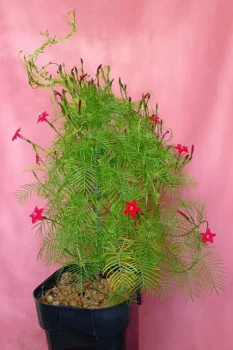
Cypress Vine: A Delicate Beauty with a Complex Story
If you’re looking for a fast-growing vine that brings tropical flair to your garden, cypress vine (Ipomoea quamoclit) might catch your eye. This feathery-leafed climber produces stunning red flowers that seem to dance in the breeze, but before you plant it, there’s more to this beauty than meets the eye.
What Is Cypress Vine?
Cypress vine is an annual flowering vine that belongs to the morning glory family. Despite its delicate appearance, this hardy climber can quickly cover fences, trellises, and other vertical structures with its intricate, thread-like foliage and trumpet-shaped blooms. The plant is also known by its scientific synonyms Quamoclit quamoclit and Quamoclit vulgaris, though these names are less commonly used.
A Non-Native with Wide Appeal
Here’s where things get interesting: cypress vine isn’t actually native to North America. Originally from tropical regions of the Americas, this plant has made itself quite at home across much of the United States. It now grows and reproduces on its own in numerous states, from the Southeast to the Midwest and even parts of the West Coast.
You can find established populations of cypress vine in Alabama, Arkansas, California, Florida, Georgia, Illinois, Indiana, Kansas, Kentucky, Louisiana, Maryland, Mississippi, Missouri, New York, North Carolina, Oklahoma, Pennsylvania, South Carolina, Tennessee, Texas, Virginia, and Washington D.C., as well as in several U.S. territories.
- Species observed
- No observations
Garden Appeal and Landscape Use
So why do gardeners love cypress vine despite its non-native status? The answer lies in its unique combination of delicate beauty and vigorous growth:
- Feathery, fern-like foliage creates an airy, tropical texture
- Bright red, star-shaped flowers bloom from summer through fall
- Fast growth makes it perfect for quick screening or covering eyesores
- Attracts hummingbirds and butterflies to the garden
- Works well in cottage gardens, wildlife gardens, and container plantings
Growing Conditions and Care
Cypress vine is refreshingly easy to grow, which partly explains its success as a non-native species. As an annual herb, it completes its entire life cycle in one growing season, though it often self-seeds for the following year.
The plant typically grows as a facultative upland species, meaning it usually prefers non-wetland areas but can tolerate some moisture. Here’s what it needs to thrive:
- Sunlight: Full sun to partial shade
- Soil: Well-draining soil of average fertility
- Water: Regular moisture, but not waterlogged conditions
- Support: Climbing structure like a trellis, fence, or arbor
- Temperature: Warm weather; plant after all danger of frost has passed
Wildlife Benefits
While cypress vine provides some wildlife value, it’s worth noting that research indicates it contributes only a small percentage (2-5%) to the diet of both large animals and birds, and offers sparse cover. However, its nectar-rich flowers do attract pollinators, particularly hummingbirds who are drawn to the red, tubular blooms.
Planting and Care Tips
Getting cypress vine established in your garden is straightforward:
- Direct sow seeds in late spring after soil has warmed
- Scarify or nick the hard seed coat to improve germination
- Plant seeds ¼ inch deep and provide climbing support early
- Water regularly during establishment, then maintain consistent moisture
- Deadhead spent flowers to encourage continued blooming
- Allow some flowers to go to seed if you want self-seeding next year
A Thoughtful Choice
While cypress vine isn’t considered invasive or noxious, its non-native status means it doesn’t provide the same ecological benefits as native plants. If you’re focused on supporting local wildlife and ecosystems, consider native alternatives like trumpet vine (Campsis radicans) or native morning glories.
That said, if you choose to grow cypress vine, you can enjoy its delicate beauty while being a responsible gardener by preventing it from spreading into natural areas. Its annual nature and the fact that it’s well-established in many regions make it a relatively low-impact choice among non-native ornamentals.
Whether you’re drawn to its hummingbird-attracting flowers or its ability to quickly soften harsh garden structures, cypress vine offers a unique combination of tropical elegance and easy care that’s hard to resist.