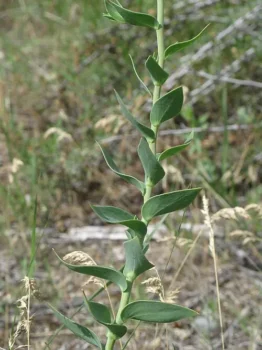
Dalmatian Toadflax: A Beautiful but Problematic Plant You Should Avoid
With its cheerful yellow snapdragon-like flowers and impressive height, Dalmatian toadflax (Linaria dalmatica) might seem like an attractive addition to your garden. However, this Mediterranean native has earned a notorious reputation across North America as an aggressive invasive species that’s best left out of your landscape plans.
What is Dalmatian Toadflax?
Dalmatian toadflax is a perennial forb—essentially a non-woody herbaceous plant that comes back year after year. This hardy plant can reach 2-4 feet in height and produces striking yellow flowers with bright orange centers that bloom from late spring through summer. The flowers are arranged on tall spikes that make quite a visual statement, which unfortunately contributes to its appeal and spread.
Where Does It Come From and Where Has It Spread?
Originally native to the Mediterranean region, particularly the Balkans, Dalmatian toadflax has made itself at home across an alarming number of North American locations. It now grows wild in Alberta, British Columbia, Manitoba, New Brunswick, Nova Scotia, Ontario, Quebec, Saskatchewan, Newfoundland, and dozens of U.S. states including Arizona, California, Colorado, Connecticut, Idaho, Illinois, Indiana, Iowa, Kansas, Maine, Massachusetts, Michigan, Minnesota, Montana, Nebraska, Nevada, New Hampshire, New Jersey, New Mexico, New York, North Dakota, Ohio, Oklahoma, Oregon, Pennsylvania, South Dakota, Utah, Vermont, Washington, Wisconsin, and Wyoming.
- Species observed
- No observations
Why You Shouldn’t Plant Dalmatian Toadflax
Here’s where things get serious: Dalmatian toadflax is classified as Prohibited/Restricted in Wisconsin and is considered invasive across much of its introduced range. This means it’s not just unwelcome—it’s actually harmful to local ecosystems. Here’s why this plant is problematic:
- It spreads aggressively through both seeds and underground rhizomes
- It outcompetes native plants, reducing biodiversity
- It’s extremely difficult to remove once established
- It can quickly dominate disturbed areas and natural habitats
- It offers limited benefits to native wildlife compared to indigenous alternatives
Growing Conditions (For Identification Purposes Only)
Understanding where and how Dalmatian toadflax thrives can help you identify and remove it from your property. This invasive species is remarkably adaptable and hardy in USDA zones 3-9. It prefers:
- Full sun exposure
- Well-drained soils (though it tolerates various soil types)
- Dry conditions once established
- Disturbed areas, roadsides, and open spaces
Its drought tolerance and ability to thrive in poor soils make it particularly problematic, as it can establish in areas where many native plants struggle.
Better Native Alternatives
Instead of risking the ecological damage that comes with planting Dalmatian toadflax, consider these beautiful native alternatives that provide similar aesthetic appeal:
- Wild bergamot (Monarda fistulosa) – offers purple flowers and attracts beneficial insects
- Lanceleaf coreopsis (Coreopsis lanceolata) – provides cheerful yellow blooms
- Wild lupine (Lupinus perennis) – creates striking flower spikes in blue and purple
- Black-eyed Susan (Rudbeckia fulgida) – delivers long-lasting yellow flowers
What to Do If You Have Dalmatian Toadflax
If you discover Dalmatian toadflax on your property, it’s important to remove it promptly and thoroughly. Contact your local extension office or invasive species management program for guidance on proper removal techniques, as improper handling can actually help it spread further.
While Dalmatian toadflax might catch your eye with its attractive flowers, choosing native alternatives will give you the beauty you want while supporting local ecosystems and wildlife. Your garden—and your local environment—will thank you for making the responsible choice.