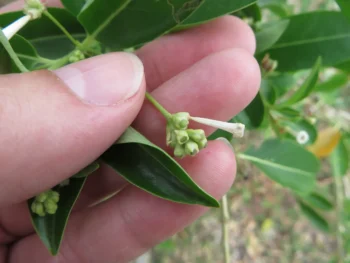
Day Jessamine: A Fragrant Tropical Shrub for Warm Climate Gardens
If you’ve ever caught a whiff of sweet, jasmine-like fragrance wafting through a warm evening breeze, you might have encountered day jessamine (Cestrum diurnum). This tropical shrub has been winning over gardeners in warmer climates with its delightfully scented blooms and lush appearance, though it comes with some important considerations for the conscientious gardener.
What is Day Jessamine?
Day jessamine is a perennial shrub that typically grows as a multi-stemmed woody plant reaching up to 13-16 feet in height, though it can sometimes grow taller under ideal conditions. Despite its common name suggesting a connection to true jasmine, this plant belongs to the nightshade family and offers its own unique charm to the garden landscape.
The plant produces clusters of small, tubular white flowers that release their strongest fragrance during daylight hours – hence the day in its name. These blooms eventually give way to small berries that transition from green to glossy black as they mature.
Native Status and Geographic Distribution
Here’s where things get interesting (and important): day jessamine isn’t actually native to the United States. Originally hailing from the West Indies and Central America, this shrub has established itself as a non-native species that reproduces spontaneously in several U.S. regions. You’ll find it growing in Florida, Hawaii, Texas, Puerto Rico, and the U.S. Virgin Islands.
- Species observed
- No observations
Should You Plant Day Jessamine?
This is where the gardener’s dilemma comes in. On one hand, day jessamine offers some genuinely appealing qualities:
- Intensely fragrant flowers that perfume the garden during the day
- Glossy, attractive foliage that stays green year-round in suitable climates
- Relatively easy care once established
- Can serve as an effective hedge, screen, or specimen plant
- Attracts butterflies and other pollinators
However, as a non-native species that readily self-seeds and establishes in the wild, it’s worth considering native alternatives that can provide similar benefits while supporting local ecosystems. Before planting, check with your local extension office about any concerns in your specific area.
Growing Conditions and Care
If you decide to grow day jessamine, you’ll need to live in USDA hardiness zones 9-11, as this tropical plant doesn’t tolerate frost well. The good news is that it’s generally low-maintenance once you get the basics right.
Light and Soil Requirements
Day jessamine thrives in full sun to partial shade, though it’ll produce the most flowers with plenty of sunlight. As for soil, it’s not particularly picky – just make sure it drains well. This shrub doesn’t like to sit in waterlogged conditions, which aligns with its wetland status as an obligate upland plant in most regions.
Watering and Fertilization
Regular watering during the growing season keeps day jessamine happy, but avoid overwatering. Once established, it shows decent drought tolerance. A balanced fertilizer applied during the growing season can encourage more blooms and healthier growth.
Pruning and Maintenance
Regular pruning helps maintain the plant’s shape and prevents it from becoming too leggy. You can prune it quite hard if needed – this resilient shrub typically bounces back well. Just remember to wear gloves, as all parts of the plant are toxic if ingested.
Landscape Design Ideas
Day jessamine works well in tropical and subtropical garden designs where you want to create:
- Fragrant hedges or privacy screens
- Backdrop plantings for smaller flowering plants
- Specimen features in mixed shrub borders
- Foundation plantings in warm climate homes
A Word of Caution
While day jessamine can be an attractive garden addition, remember that it’s toxic to humans and pets if ingested. Keep this in mind if you have curious children or animals who might sample garden plants.
Native Alternatives to Consider
If you love the idea of fragrant shrubs but prefer to support native ecosystems, consider researching native alternatives in your region. Many areas have indigenous plants that offer similar aesthetic benefits while providing crucial habitat and food sources for local wildlife.
Day jessamine can certainly add tropical flair and heavenly fragrance to suitable gardens, but thoughtful gardeners will weigh its non-native status against their conservation goals. Whatever you choose, happy gardening!