Non-native Plants

Denseflower Cordgrass

Spartina densiflora

USDA symbol: SPDE2

perennial grass

Canada: non-native, naturalized
Lower 48 states: non-native, naturalized

If you’re dealing with soggy, salty soil that seems impossible to plant, you might have stumbled across denseflower cordgrass (Spartina densiflora) in your research. This perennial grass has made quite a name for itself in wetland restoration projects, though it comes with some important considerations for the home gardener. Denseflower ...

Denseflower Cordgrass: A Non-Native Wetland Grass for Specialized Gardens

If you’re dealing with soggy, salty soil that seems impossible to plant, you might have stumbled across denseflower cordgrass (Spartina densiflora) in your research. This perennial grass has made quite a name for itself in wetland restoration projects, though it comes with some important considerations for the home gardener.

What is Denseflower Cordgrass?

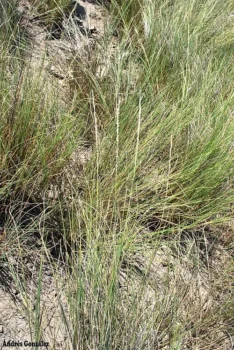
Denseflower cordgrass is a robust perennial grass that forms dense colonies through underground rhizomes. Originally from South America, this hardy plant has established itself along the Pacific Coast of North America. You might also see it referenced by its scientific synonym, Sporobolus densiflorus.

This grass is what botanists call an obligate wetland plant, meaning it almost always occurs in wetlands across all regions where it grows. Think of it as nature’s way of saying water required!

Where Does It Grow?

In North America, denseflower cordgrass has established populations in British Columbia, California, Oregon, and Washington. It thrives in coastal salt marshes, brackish wetlands, and mudflats where few other plants can survive.

  • Species observed
  • No observations

Should You Plant Denseflower Cordgrass?

Here’s where things get a bit complicated. While denseflower cordgrass isn’t classified as invasive in the data available, it is a non-native species that reproduces readily in the wild. Before considering this plant, ask yourself:

  • Do you have a specialized wetland restoration project?
  • Are you dealing with extremely salty, wet conditions where native options have failed?
  • Have you exhausted native alternatives?

For most home gardens, native cordgrass species like Spartina foliosa (California cordgrass) or other regional wetland natives would be better choices that support local ecosystems.

Growing Conditions and Care

If you do decide to work with denseflower cordgrass, here’s what it needs:

  • Moisture: Consistent wet to saturated soil conditions
  • Salinity: Tolerates saltwater and brackish conditions exceptionally well
  • Sun: Full sun exposure
  • Hardiness: Suitable for USDA zones 8-10
  • Soil: Clay, sand, or muddy substrates in wetland settings

Landscape Role and Design

When appropriately used, denseflower cordgrass serves specific functions:

  • Erosion control along shorelines
  • Stabilization of mudflats and marsh edges
  • Salt marsh restoration projects
  • Living shoreline installations

This isn’t a plant for typical garden borders or ornamental landscapes. It’s a specialized tool for challenging coastal and wetland environments.

Wildlife and Pollinator Benefits

As a wind-pollinated grass, denseflower cordgrass doesn’t offer significant direct benefits to pollinators. Its wildlife value in non-native settings is limited compared to native alternatives that have co-evolved with local fauna.

The Bottom Line

Denseflower cordgrass fills a niche in extreme wetland conditions where salt tolerance is crucial. However, as a non-native species, it’s worth exploring native alternatives first. If you’re working on a specialized restoration project or dealing with conditions where natives have struggled, consult with local restoration professionals who can help you make the best choice for your specific situation and local ecosystem.

Remember, the best garden plants are often the ones that naturally belong in your region – they’ll be happier, you’ll work less, and local wildlife will thank you!

Spartina densiflora is also known as...

Often we refer to plants by their common names. When shopping for plants the scientific name is the best way to positively identify the plant species you desire. But some plants have more than one name! While it doesn't happen often, nurseries might display one name while you're searching for another. Spartina densiflora is also known as:

Sporobolus densiflorus Peterson & | USDA symbol: SPDE7

Why do some plants have more than one name? Over time plant species may be renamed for a few reasons:

  1. Botanists in different regions named the same plant without knowing it had already been classified.
  2. A species was reclassified after scientific advances in, for example, DNA analysis.
  3. Slight variations within a species are sometimes mistakenly identified as entirely new species.

Wetland Status

The rule of seasoned gardeners and landscapers is to choose the "right plant for the right place" — matching plants to their ideal growing conditions, so they'll thrive with less care and fewer inputs. But the simplicity of this catchphrase conceals how tricky plant selection can be if you don't have the right information. While tags on nursery plants list watering requirements, there's more to the story.

Knowing a plant's wetland status can simplify the process by revealing the interaction between plants, water, and soil. You might be surprised to learn that popular landscape plants are wetland species! And what may be a wetland plant in one area, in another it might thrive in drier conditions. The table below gives insight into the preferred growing conditions of this plant throughout its geographical distribution.

Region
Preferred Habitat

Arid West (AZ, CA, CO, ID, MT, NV, NM, OR, TX, UT, WA, WY)

Obligate Wetland

Atlantic and Gulf Coastal Plain (AL, AR, DC, DE, FL, GA, IL, KY, LA, MD, MS, MO, NC, NJ, OK, PA, SC, TN, TX, VA)

Obligate Wetland

Great Plains (CO, KS, MN, MT, NE, NM, ND, OK, SD, TX, WY)

Obligate Wetland

Western Mountains, Valleys, and Coast (AZ, CA, CO, ID, MT, NV, NM, OR, SD, UT, WA, WY)

Obligate Wetland
Wetland Glossary
Obligate Wetland
Facultative Wetland
Facultative
Facultative Upland
Obligate Upland
Almost always occurs in wetlands
Usually occurs in wetlands but may occur in non-wetlands
Can occur in wetlands and non-wetlands
Usually occurs in non-wetlands but may occur in wetlands
Almost never occurs in wetlands

Classification

Group: Monocot
Kingdom: Plantae - Plants
Subkingdom: Tracheobionta - Vascular plants
Superdivision: Spermatophyta - Seed plants
Division: Magnoliophyta - Flowering plants
Class: Liliopsida - Monocotyledons
Subclass: Commelinidae
Order: Cyperales
Family: Poaceae Barnhart - Grass family
Genus: Spartina Schreb. - cordgrass

Species: Spartina densiflora Brongn. - denseflower cordgrass

Plant data source: USDA, NRCS 2025. The PLANTS Database. https://plants.usda.gov,. 2/25/2025. National Plant Data Team, Greensboro, NC USA