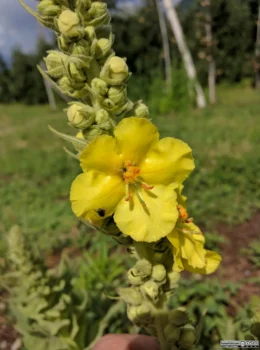
Denseflower Mullein: A Towering European Beauty for American Gardens
If you’ve ever wondered about that tall, stately plant with fuzzy leaves and bright yellow flower spikes popping up in meadows and roadsides, you might be looking at denseflower mullein (Verbascum densiflorum). This European transplant has made itself at home in parts of the United States, creating quite the conversation piece among gardeners who appreciate its dramatic architectural presence.
What is Denseflower Mullein?
Denseflower mullein, also known by its synonym Verbascum thapsiforme, is a biennial forb that doesn’t mess around when it comes to making a statement. As a non-native species that was introduced from Europe, it has established itself in Iowa, Massachusetts, Michigan, and Wisconsin, where it reproduces on its own and persists in the wild.
This plant follows the classic biennial lifestyle – spending its first year as a low rosette of woolly, gray-green leaves before shooting up into a towering flower spike in its second year that can reach 4-8 feet tall.
- Species observed
- No observations
The Appeal of Growing Denseflower Mullein
There’s something undeniably striking about denseflower mullein’s presence in the garden. Here’s what draws gardeners to this European native:
- Dramatic height: Those impressive flower spikes create excellent vertical interest and work beautifully as background plants
- Pollinator magnet: The bright yellow flowers are beloved by bees, butterflies, and other beneficial insects
- Low maintenance: Once established, it’s remarkably drought tolerant and requires minimal care
- Self-seeding: It readily self-sows, making it perfect for naturalized areas and cottage gardens
- Extended bloom: The flower spikes provide color throughout much of the summer
Growing Conditions and Care
Denseflower mullein is surprisingly easy-going for such an impressive plant. Here’s what it needs to thrive:
Sunlight: Full sun is essential – this plant won’t perform well in shade
Soil: Well-drained soil is crucial. It’s quite tolerant of poor soils and actually prefers lean conditions over rich, fertile ground
Water: Drought tolerant once established, though it appreciates some water during its first growing season
Climate: Hardy in USDA zones 4-8, making it suitable for much of the northern United States
Planting and Propagation
The easiest way to grow denseflower mullein is from seed. You can direct sow seeds in fall or early spring, barely covering them as they need light to germinate. The plant will self-seed readily once established, so you may find new plants popping up in unexpected places – which can be either delightful or problematic depending on your garden goals.
During the first year, you’ll see only a rosette of large, fuzzy leaves. Don’t worry – the magic happens in year two when that impressive flower spike emerges.
Garden Design and Landscape Use
Denseflower mullein works beautifully in:
- Cottage gardens where its informal, self-seeding nature fits right in
- Wildflower meadows and naturalized areas
- Background plantings where its height provides structure
- Pollinator gardens where its flowers support beneficial insects
A Word About Native Alternatives
While denseflower mullein can be a lovely addition to the right garden, it’s worth considering native alternatives that provide similar benefits while supporting local ecosystems. Some great options include:
- Great mullein (Verbascum thapsus) – though this is also non-native
- Wild bergamot (Monarda fistulosa) for pollinator appeal
- Cup plant (Silphium perfoliatum) for dramatic height
- New England aster (Symphyotrichum novae-angliae) for late-season color
The Bottom Line
Denseflower mullein offers gardeners an easy-care plant with impressive stature and excellent pollinator value. While it’s not native to North America, it’s not currently listed as invasive in most areas where it grows. If you decide to grow it, be prepared for its self-seeding nature and consider pairing it with native plants to create a more ecologically balanced garden.
Whether you’re drawn to its towering flower spikes or appreciate its low-maintenance nature, denseflower mullein can certainly earn its place in the right garden setting.