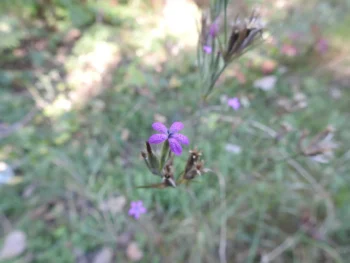
Deptford Pink: A Delicate European Wildflower for American Gardens
If you’ve ever spotted tiny pink flowers scattered across sandy roadsides or forgotten corners of gardens, you may have encountered Deptford pink (Dianthus armeria). This charming little wildflower brings a touch of European countryside to North American landscapes, though it comes with both benefits and considerations that gardeners should understand.
What Is Deptford Pink?
Deptford pink is a small annual or biennial forb—basically a non-woody flowering plant that completes its life cycle in one to two years. Originally from Europe and western Asia, this petite member of the carnation family has made itself at home across much of North America. Don’t let its delicate appearance fool you; this little survivor has proven remarkably adaptable to various climates and conditions.
Where You’ll Find It Growing
This widespread wildflower has established itself across an impressive range, from coast to coast and border to border. You can find Deptford pink growing in most U.S. states and several Canadian provinces, including Alberta, British Columbia, Ontario, and the Maritime provinces. It thrives in USDA hardiness zones 3-9, making it suitable for most temperate regions of North America.
- Species observed
- No observations
What Makes It Special (Or Not So Special)
Deptford pink offers a few noteworthy characteristics:
- Tiny but mighty flowers: The small pink blooms measure just half an inch across but appear in clusters
- Narrow, grass-like leaves: Linear foliage gives it a delicate, almost ornamental grass appearance
- Compact size: Plants typically reach 6-18 inches tall and spread 4-8 inches wide
- Drought tolerance: Once established, it handles dry conditions remarkably well
The Garden Verdict: Should You Plant It?
Here’s where things get interesting. Deptford pink isn’t native to North America, but it’s also not considered invasive or particularly problematic. It falls into that gray area of naturalized plants that have found their niche without causing major ecological disruption.
Reasons you might want it:
- Low-maintenance ground cover for difficult spots
- Attracts small pollinators like bees and butterflies
- Perfect for rock gardens or naturalized areas
- Thrives in poor, sandy soils where other plants struggle
Reasons to consider alternatives:
- As a non-native, it doesn’t support local ecosystems as effectively as indigenous plants
- Short bloom period and relatively unremarkable appearance
- May self-seed more enthusiastically than desired
Native Alternatives to Consider
If you’re drawn to Deptford pink’s delicate charm but prefer supporting native wildlife, consider these alternatives:
- Wild bergamot (Monarda fistulosa): Native pollinator magnet with pink-purple flowers
- Prairie phlox (Phlox pilosa): Native pink flowers with similar delicate appeal
- Wild columbine (Aquilegia canadensis): Native with distinctive flowers that attract hummingbirds
How to Grow Deptford Pink Successfully
If you decide to give this European emigrant a try, here’s what it needs to thrive:
Growing Conditions
- Sunlight: Full sun is essential—this plant won’t tolerate shade
- Soil: Well-drained, sandy, or gravelly soils work best
- Water: Drought-tolerant once established; avoid overwatering
- pH: Adapts to various soil pH levels
Planting and Care Tips
- Sow seeds directly in fall or early spring
- Scatter seeds on prepared soil surface—they need light to germinate
- Water gently until seedlings establish
- Once growing, minimal care required
- Deadhead spent flowers to prevent excessive self-seeding
The Bottom Line
Deptford pink represents the complex world of non-native plants that aren’t necessarily bad but aren’t necessarily optimal choices either. It’s a perfectly serviceable little plant for difficult growing conditions, particularly if you need something for poor, dry soils where native options might struggle. However, given the choice, exploring native alternatives first will better serve your local ecosystem while potentially offering more dramatic garden impact.
Remember, every garden is different, and sometimes the right plant is simply the one that thrives in your specific conditions while bringing you joy. Whether that’s Deptford pink or a native alternative, the most important thing is creating a space that connects you with the natural world.