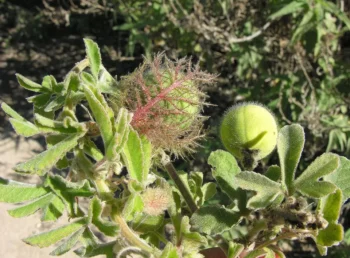
Desert Passionflower: A Lesser-Known Member of the Passion Vine Family
Meet the desert passionflower (Passiflora arida), a somewhat mysterious member of the famous passion vine family. While most gardeners are familiar with the showier passion vines that grace arbors and fences, this particular species flies under the radar – and for good reason, as there’s still quite a bit we’re learning about it.
What Exactly Is Desert Passionflower?
Desert passionflower is a perennial herbaceous plant, meaning it comes back year after year but doesn’t develop woody stems like its climbing cousins. Instead of reaching for the sky on sturdy vines, this passion plant stays closer to the ground as what botanists call a forb – essentially a non-woody flowering plant.
As a non-native species that has established itself in parts of the United States, desert passionflower has found a foothold in Arizona, where it reproduces on its own without human intervention.
Where You’ll Find It Growing
Currently, desert passionflower has been documented growing in Arizona. Its presence seems to be limited to this southwestern state, though like many introduced species, its range could potentially expand over time.
- Species observed
- No observations
Should You Plant Desert Passionflower?
Here’s where things get a bit tricky. While desert passionflower isn’t currently flagged as invasive or noxious, we simply don’t have enough information about its long-term behavior in garden settings or its potential impact on native ecosystems. This lack of data makes it difficult to give a wholehearted recommendation either way.
If you’re drawn to passion vines, consider these factors:
- Limited horticultural information means you’d be gardening somewhat in the dark
- Unknown growth requirements could lead to frustrating gardening experiences
- Unclear wildlife and pollinator benefits
- Potential for unpredictable garden behavior
Native Alternatives Worth Considering
Instead of taking a chance on desert passionflower, why not explore some fantastic native options that support local ecosystems? Consider these southwestern natives:
- Native passion vines like Passiflora mexicana (if available in your area)
- Desert willow for flowering appeal
- Native morning glories for vine-like growth
- Local wildflowers that support native pollinators
The Bottom Line
Desert passionflower remains something of an enigma in the gardening world. While it’s not necessarily a plant to avoid, the lack of reliable growing information and unknown ecological impacts make it a questionable choice for most gardeners. Your garden – and local wildlife – will likely be better served by well-researched native plants that come with clear care instructions and proven benefits.
If you’re curious about passion vines in general, stick with well-documented species or consult with local native plant societies to find the best options for your specific region. After all, gardening should be rewarding, not a guessing game!