Disphyma crassifolium: A Coastal Succulent Worth Knowing
Meet Disphyma crassifolium, a charming succulent groundcover that might just be the coastal garden companion you’ve been searching for. While it may not roll off the tongue like sunny marigold or happy daisy, this South African native has some serious garden credentials that deserve a closer look.
What’s in a Name?
This plant goes by its botanical name, Disphyma crassifolium, since it doesn’t have a widely recognized common name in gardening circles. You might also see it listed under its old scientific name, Mesembryanthemum crassifolium, in some older gardening references. Think of it as the plant equivalent of a one-name celebrity – sometimes that’s all you need!
Where Does It Come From?
Disphyma crassifolium hails from the coastal regions of South Africa, where it has mastered the art of thriving in sandy, salty conditions while looking effortlessly elegant. This means it’s not native to North American gardens, but it has found a happy home in similar coastal climates around the world.
The Garden Appeal Factor
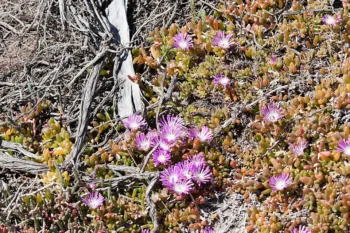
What makes this plant special? Picture a low-growing carpet of thick, succulent leaves that seem almost jade-like in their glossy appearance. During blooming season, it produces small, daisy-like flowers that add delicate pops of color to the landscape. It’s the kind of plant that whispers rather than shouts – perfect for gardeners who appreciate understated beauty.
Where It Shines in Your Garden
This groundcover excels in several garden scenarios:
- Coastal gardens where salt spray is a concern
- Rock gardens and xeriscaped areas
- Mediterranean-style landscapes
- Slopes and areas needing erosion control
- Containers and succulent gardens
Its low-growing, spreading habit makes it an excellent choice for filling in spaces between stepping stones or cascading over retaining walls.
Growing Conditions and Care
Like many succulents, Disphyma crassifolium has some pretty specific preferences, but once you get them right, it’s relatively low-maintenance:
- Sunlight: Loves full sun exposure
- Soil: Well-draining soil is absolutely essential – soggy feet are this plant’s kryptonite
- Water: Drought tolerant once established; water sparingly
- Climate: Thrives in USDA hardiness zones 9-11
Planting and Care Tips
Getting started with Disphyma crassifolium is fairly straightforward:
- Plant in spring after the last frost danger has passed
- Ensure excellent drainage – consider raised beds or adding sand to heavy soils
- Water regularly during establishment, then reduce frequency
- Protect from hard frosts in borderline zones
- Minimal fertilization needed – these plants prefer lean conditions
Wildlife and Pollinator Benefits
While not a native species, Disphyma crassifolium does offer some benefits to local wildlife. Its flowers attract small pollinators, including bees, during its blooming period. However, since it’s not native to North American ecosystems, it won’t provide the same level of ecological support as indigenous plants.
Should You Plant It?
Disphyma crassifolium can be a worthwhile addition to the right garden, particularly if you’re dealing with challenging coastal conditions or creating a water-wise landscape. However, consider first exploring native groundcover options that might serve similar functions while providing greater ecological benefits to your local environment.
If you do choose to grow this South African succulent, you’ll be rewarded with an attractive, low-maintenance groundcover that brings a touch of coastal charm to your garden. Just remember – good drainage isn’t optional, it’s essential for success!