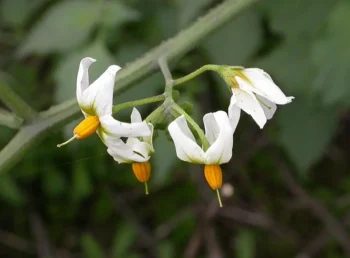
Divine Nightshade: A Non-Native Solanum That’s Made Itself at Home
If you’ve spotted a small plant with delicate white flowers and tiny black berries lurking in your garden corners, you might have encountered divine nightshade (Solanum nigrescens). This unassuming member of the nightshade family has quite the story to tell – and some important considerations for gardeners to weigh.
What Exactly Is Divine Nightshade?
Divine nightshade is a forb herb that can behave as either an annual or perennial, depending on growing conditions. As a forb, it lacks the woody stems you’d find on shrubs or trees, instead sporting soft, green tissue that dies back seasonally. Don’t let its modest appearance fool you – this plant is quite the survivor and has earned several scientific aliases over the years, including Solanum gracile and Solanum americanum var. baylisii.
Where You’ll Find It Growing
Originally hailing from South America, divine nightshade has established itself across the southeastern United States and beyond. You’ll currently find it thriving in Alabama, Florida, Georgia, Hawaii, Mississippi, North Carolina, South Carolina, and Puerto Rico. It’s important to note that this species is non-native to these regions – it arrived through human introduction and has successfully naturalized, reproducing on its own without any help from us.
- Species observed
- No observations
The Good, The Bad, and The Practical
Let’s be honest: divine nightshade isn’t winning any beauty contests. Its aesthetic appeal is modest at best, featuring small white star-shaped flowers that give way to tiny black berries. The plant typically maintains a low, somewhat weedy appearance that’s more functional than ornamental.
However, if you’re considering this plant for your garden, here’s what you should know:
- It’s incredibly adaptable to various growing conditions
- Thrives in disturbed soils and can handle both full sun and partial shade
- Self-sows readily, so expect it to spread
- Hardy in USDA zones 8-11
- Requires minimal care once established
Should You Plant Divine Nightshade?
Here’s where things get interesting. While divine nightshade isn’t listed as invasive or noxious, its non-native status means it doesn’t provide the same ecological benefits as native plants. If you’re looking to support local wildlife and pollinators, you’d be better served by choosing native alternatives.
That said, if divine nightshade has already appeared in your garden naturally, there’s no urgent need to remove it unless you’re concerned about it spreading further. Its small flowers do provide some minor benefits to small insects, though the pollinator value is limited compared to native species.
Native Alternatives Worth Considering
Instead of planting divine nightshade, consider these native options that offer similar growing ease with greater ecological benefits:
- Native ground cherries (Physalis species) for similar berry production
- Wild bergamot for better pollinator support
- Native asters for late-season blooms and wildlife value
If You Choose to Grow It
Should you decide to work with divine nightshade that’s already established, here are some care tips:
- Provide well-draining soil – it’s not particular about soil quality
- Water sparingly; it’s quite drought-tolerant once established
- Be prepared for self-seeding – remove spent flowers if you want to control spread
- Monitor for any aggressive spreading behavior
The Bottom Line
Divine nightshade represents one of those neither here nor there plants – not aggressively invasive, but not particularly beneficial either. While it won’t cause major problems in your garden, it also won’t provide the ecosystem services that native plants offer. If you’re passionate about supporting local wildlife and creating sustainable landscapes, your gardening energy is probably better invested in native species that pack more ecological punch.
Remember, every plant choice we make is a vote for the kind of ecosystem we want to support. Choose wisely, and your local pollinators, birds, and beneficial insects will thank you!