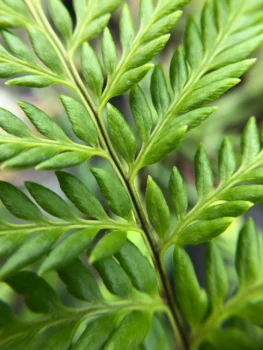
Dixie Silverback Fern: A Shimmery Addition to Your Shade Garden
If you’ve ever wondered what it would look like if a fern decided to dust itself with silver glitter, meet the Dixie silverback fern (Pityrogramma calomelanos). This eye-catching perennial fern brings a touch of metallic magic to shaded garden spaces with its distinctive silvery-white undersides that seem to glow in dappled light.
What Makes This Fern Special?
The Dixie silverback fern isn’t your typical woodland fern. What sets it apart is the powdery white coating called farina that covers the undersides of its fronds. This natural powder gives the plant its silverback nickname and creates a stunning two-toned effect – green on top, silver-white underneath. When a breeze catches the fronds, you’ll get delightful flashes of silver that add movement and interest to any shade garden.
As a perennial herb-like plant (technically classified as a forb), this fern maintains its presence year-round in suitable climates, making it a reliable garden companion once established.
Where Does It Come From?
Originally from tropical and subtropical regions of Central and South America, the Dixie silverback fern has made itself at home in several U.S. locations. You’ll find it growing in Florida, Hawaii, Guam, Palau, Puerto Rico, and the Virgin Islands, where it has naturalized and reproduces on its own.
- Species observed
- No observations
Since this fern is non-native to these areas, consider pairing it with or choosing native fern alternatives like the Southern shield fern or Christmas fern, depending on your region.
Is It Right for Your Garden?
The Dixie silverback fern can be a wonderful addition to the right garden setting, but it’s not for everyone. Here’s what to consider:
Perfect Garden Matches:
- Tropical and subtropical landscape designs
- Shade gardens needing textural interest
- Rock gardens with filtered light
- Container gardens on patios or decks
- Areas where you want low-maintenance ground cover
Growing Requirements:
- Light: Partial to full shade (direct sun can scorch the fronds)
- Soil: Well-draining, rocky, or sandy soils preferred
- Water: Moderate moisture; drought tolerant once established
- Climate: USDA hardiness zones 9-11 (not frost tolerant)
Garden Design Tips
Use the Dixie silverback fern as an accent plant to create focal points in shaded areas. Its silvery undersides make it perfect for spots where you can view it from below or where gentle breezes will show off its two-toned nature. Plant it along pathways, near seating areas, or in raised beds where its unique coloring can be appreciated.
The fern works beautifully in groupings with other shade-loving plants, providing textural contrast against broad-leaved plants or adding metallic accents to green compositions.
Wetland Considerations
Interestingly, this fern has different moisture preferences depending on location. In most regions, it’s considered an upland plant that rarely occurs in wetlands. However, in Hawaii, it’s more flexible and can handle both wetland and non-wetland conditions.
Wildlife and Pollinator Value
As a fern, the Dixie silverback doesn’t produce flowers, so it won’t directly support pollinators like bees and butterflies. However, established fern colonies can provide shelter for small wildlife and contribute to the overall ecosystem diversity in your garden.
Care and Maintenance
One of the best things about this fern is its relatively low-maintenance nature. Once established, it’s quite drought tolerant and doesn’t require frequent watering. Simply ensure it has good drainage to prevent root rot, and provide some protection from harsh afternoon sun.
Remove any damaged or dead fronds as needed, and enjoy watching the silver undersides catch the light as your fern matures and spreads.
The Bottom Line
The Dixie silverback fern offers something unique for gardeners in warmer climates who want to add metallic shimmer to their shade gardens. While it’s not native to U.S. regions, it can be a striking addition when used thoughtfully alongside native plants. Just remember to consider native fern alternatives first, and if you do choose this silvery beauty, give it the partial shade and good drainage it craves for best results.