Dog’s-Tongue: A Tropical Groundcover for Warm Climate Gardens
If you’re looking for a low-maintenance groundcover that thrives in warm, humid climates, you might want to get acquainted with dog’s-tongue (Pseudelephantopus spicatus). This unassuming perennial herb has quietly established itself in tropical and subtropical regions across the southern United States, offering gardeners an easy-care option for challenging spots in the landscape.
What is Dog’s-Tongue?
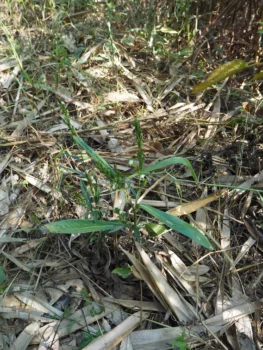
Dog’s-tongue is a perennial forb—essentially an herbaceous plant without woody stems—that belongs to the sunflower family. You might also see it listed under its botanical synonym, Elephantopus spicatus. This low-growing plant forms clumps of broad, somewhat fuzzy basal leaves that give it its common name, as they’re said to resemble a dog’s tongue in shape and texture.
The plant produces small clusters of white to pinkish flower heads arranged in distinctive spikes that rise above the foliage. While not particularly showy, these blooms add a subtle charm to the garden and attract small pollinators like butterflies and native bees.
Where Does Dog’s-Tongue Grow?
Originally native to tropical regions of South and Central America and the Caribbean, dog’s-tongue has naturalized in several U.S. locations. You’ll find established populations in Florida, Hawaii, Puerto Rico, and the U.S. Virgin Islands, where it reproduces readily in the wild.
- Species observed
- No observations
It’s worth noting that while dog’s-tongue has adapted well to these areas, it’s not native to any U.S. states or territories. If you’re passionate about supporting local ecosystems, you might want to consider native alternatives that provide similar benefits to local wildlife.
Growing Conditions and Care
One of dog’s-tongue’s biggest selling points is its adaptability and low-maintenance nature. Here’s what this tropical transplant needs to thrive:
- Climate: USDA hardiness zones 9-11 (it’s not frost-tolerant)
- Light: Partial shade to full sun, though it appreciates some afternoon shade in hot climates
- Soil: Moist, well-draining soil; adaptable to various soil types
- Water: Regular moisture but not waterlogged conditions
The plant’s wetland status varies by region—it typically prefers upland sites but can tolerate some wetland conditions, particularly in Hawaii where it’s more moisture-tolerant.
Uses in the Garden
Dog’s-tongue works well as an understory groundcover in tropical and subtropical gardens. Its low-growing habit and spreading nature make it useful for:
- Filling in bare spots under trees and shrubs
- Naturalizing in informal landscape areas
- Adding texture to shaded garden beds
- Creating low-maintenance groundcover in challenging spots
The plant tends to self-seed readily once established, which can be either a benefit or a concern depending on your garden goals. Keep this in mind when deciding where to plant it.
Should You Plant Dog’s-Tongue?
The decision ultimately depends on your gardening philosophy and local conditions. Dog’s-tongue offers reliable performance in warm climates with minimal care requirements, and it does provide some pollinator benefits. However, since it’s not native to U.S. regions where it’s established, it doesn’t support local wildlife ecosystems as effectively as indigenous plants would.
If you’re interested in supporting native biodiversity, consider researching native groundcovers and understory plants in your area that could fill similar roles. Your local native plant society or extension office can provide excellent recommendations for indigenous alternatives that offer comparable benefits while supporting local ecosystems.
For gardeners who choose to grow dog’s-tongue, it’s a relatively problem-free addition to the landscape that requires little fuss once established. Just be prepared for its tendency to spread and self-seed—you might find yourself with more dog’s-tongue than you bargained for!