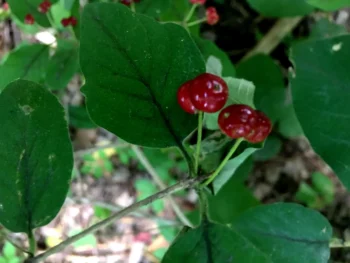
Dwarf Honeysuckle: Why This Pretty Shrub Should Stay Out of Your Garden
Don’t let the charming name fool you—dwarf honeysuckle (Lonicera xylosteum) might seem like an innocent addition to your landscape, but this European import has earned itself a spot on many gardeners’ do not plant lists. While it produces lovely flowers and colorful berries, this shrub’s aggressive spreading habits have made it a concerning invasive species across much of North America.
What Exactly Is Dwarf Honeysuckle?
Dwarf honeysuckle is a perennial, multi-stemmed woody shrub that typically grows 4 to 5 meters (13 to 16 feet) tall, though it can reach greater heights under the right conditions. Despite its dwarf moniker, this honeysuckle can actually grow quite large! The plant features opposite, oval-shaped leaves and produces small, creamy white to yellowish flowers in late spring and early summer, followed by bright red berries that many find attractive.
Where You’ll Find It (Unfortunately)
Originally native to Europe and Asia, dwarf honeysuckle has established itself across a wide swath of North America. You can find naturalized populations in New Brunswick, Ontario, Quebec, and throughout much of the northeastern and Great Lakes states, including Connecticut, Maine, Massachusetts, New York, Pennsylvania, Michigan, Wisconsin, and many others. It has even reached as far west as Oregon and Washington.
- Species observed
- No observations
The Problem with This Pretty Plant
Here’s where things get serious: dwarf honeysuckle is classified as potentially invasive and is actually prohibited in Connecticut. This non-native species reproduces spontaneously in the wild and persists without any human help—exactly the kind of behavior that makes ecologists nervous. Once established, it can outcompete native plants and disrupt local ecosystems.
The plant thrives in USDA hardiness zones 3-7 and tolerates a wide range of growing conditions, from partial shade to full sun and various soil types. While this adaptability might sound appealing to gardeners, it’s precisely what makes the species so problematic in natural areas.
Why You Should Skip This One
Even though dwarf honeysuckle is relatively easy to grow and requires minimal care once established, we strongly recommend against planting it. Here’s why:
- It’s classified as potentially invasive and prohibited in some areas
- It can escape cultivation and invade natural areas
- It outcompetes native plants that local wildlife depends on
- Once established, it can be difficult to remove
Better Native Alternatives
Instead of dwarf honeysuckle, consider these fantastic native alternatives that will provide similar aesthetic appeal without the ecological concerns:
- American elderberry (Sambucus canadensis) – Produces beautiful white flowers and dark berries loved by birds
- Spicebush (Lindera benzoin) – Offers yellow fall color and supports native butterflies
- Native viburnums – Many species provide flowers, berries, and excellent wildlife habitat
- Serviceberry (Amelanchier species) – Beautiful spring flowers, edible berries, and stunning fall color
The Bottom Line
While dwarf honeysuckle might catch your eye with its delicate flowers and bright berries, it’s one of those plants that’s better admired from afar—preferably very far away from your garden. With so many wonderful native alternatives available, there’s simply no good reason to risk introducing this potentially problematic species to your landscape. Your local ecosystem (and your gardening neighbors) will thank you for choosing native plants instead!
Remember: the most beautiful garden is one that works in harmony with local nature, not against it.