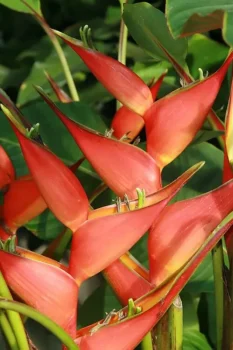
Dwarf Jamaican Heliconia: A Tropical Showstopper for Warm Climate Gardens
If you’ve ever dreamed of transforming your garden into a tropical paradise, the Dwarf Jamaican Heliconia (Heliconia stricta) might just be the plant to make that dream come true. With its bold, paddle-shaped leaves and stunning bird-of-paradise-like flowers, this perennial beauty brings serious wow factor to any warm climate landscape.
What Makes This Plant Special?
Don’t let the dwarf in its name fool you – this heliconia still makes a big statement! Growing 3-6 feet tall, it’s more compact than its towering relatives but equally impressive. The real showstoppers are its vibrant bracts in shades of orange, red, and yellow that emerge from the plant like colorful beaks reaching toward the sky.
As a forb (basically a fancy term for a non-woody perennial), this plant puts all its energy into producing those gorgeous leaves and flowers rather than building thick stems or trunks.
Where Does It Come From?
Originally native to northern South America – including Venezuela, Guyana, Suriname, and northern Brazil – this tropical beauty has made itself at home in Puerto Rico, where it now grows and reproduces on its own in the wild.
- Species observed
- No observations
Should You Plant It in Your Garden?
Here’s the scoop: while Heliconia stricta isn’t native to most of the United States, it’s not considered invasive either (at least not where data is available). If you live in zones 10-11 where it can thrive, it can be a stunning addition to your tropical garden – just be mindful about responsible gardening practices.
However, if you’re passionate about supporting native ecosystems, consider exploring native alternatives that provide similar tropical flair while benefiting local wildlife. Native plants are always the gold standard for supporting pollinators and local ecosystems!
Perfect Spots for Your Heliconia
This plant is incredibly versatile in landscape design:
- As a dramatic accent plant in tropical borders
- In large containers for patios or poolside areas
- As part of a lush, jungle-style garden design
- In greenhouse collections for cooler climates
- Grouped together for maximum visual impact
Growing Conditions That Make It Happy
Think tropical rainforest and you’ll nail the growing conditions this plant craves:
- Light: Partial shade to filtered sunlight (harsh direct sun can scorch the leaves)
- Soil: Rich, organic, well-draining soil that stays consistently moist
- Water: Regular watering to maintain moisture, but never waterlogged
- Humidity: High humidity levels (it loves that muggy tropical air!)
- Temperature: Warm temperatures year-round – it’s strictly a zones 10-11 plant
Thanks to its facultative wetland status, this adaptable plant can handle both regular garden conditions and areas that occasionally get quite wet.
Planting and Care Tips
Getting Started:
- Plant in spring when temperatures are consistently warm
- Choose a location protected from strong winds (those big leaves can get battered)
- Amend your soil with plenty of compost or organic matter
- Space plants 3-4 feet apart to allow for their full spread
Ongoing Care:
- Water regularly, especially during dry spells
- Feed with a balanced fertilizer during the growing season
- Remove spent flowers and damaged leaves to keep the plant looking its best
- In cooler areas, grow in containers that can be moved indoors during winter
Wildlife Benefits
Here’s where this plant really shines – it’s a hummingbird magnet! The tubular shape and bright colors of the flowers are perfectly designed to attract these tiny pollinators. If you love watching hummingbirds zip around your garden, this plant will definitely put you on their flight path.
The Bottom Line
Dwarf Jamaican Heliconia is undeniably gorgeous and can create that tropical oasis feeling you’re after. If you’re in the right climate zone and want to add some dramatic flair to your landscape, it’s worth considering – just remember to garden responsibly and consider native options first. Whether you choose this stunner or explore native alternatives, your garden (and the hummingbirds) will thank you for adding some tropical pizzazz!